
Secure Your Failing Dallas Retaining Wall Before A Catastrophic Collapse Occurs.
Protect your landscape and foundation with emergency retaining wall triage, engineered to strictly adhere to Dallas geotechnical standards for lateral earth pressure.
Emergency Retaining Wall Stabilization and Shoring in Dallas
When your retaining wall begins leaning aggressively, waiting for standard contractors can result in a devastating property landslide. We provide emergency retaining wall stabilization across Dallas, utilizing heavy-duty structural shoring and weep hole clearing to instantly relieve hydrostatic pressure and stop the active failure of masonry and concrete walls.
A failing retaining wall is not merely an aesthetic issue; it is an active geotechnical emergency threatening the structural boundaries of your property. The earth behind that wall weighs thousands of pounds, and when saturated, that weight multiplies exponentially. When the wall’s structural integrity is breached, the kinetic energy of the moving soil can cause a sudden, violent blowout. This blowout can drag adjacent structures, driveways, or foundations down with it, while simultaneously dumping tons of mud and debris onto the property below. Our emergency response units do not simply look at the wall and write an estimate; we deploy the necessary heavy equipment and commercial bracing to physically halt the movement. By transferring the immense lateral load to temporary shoring systems, we secure the immediate hazard. This rapid triage protects your property lines, shields you from massive liability, and gives us the critical time we need to properly engineer a permanent reconstruction. We understand the sheer terror of watching your landscape slowly slide downhill, and we have the specialized equipment and technical knowledge necessary to stop it today.
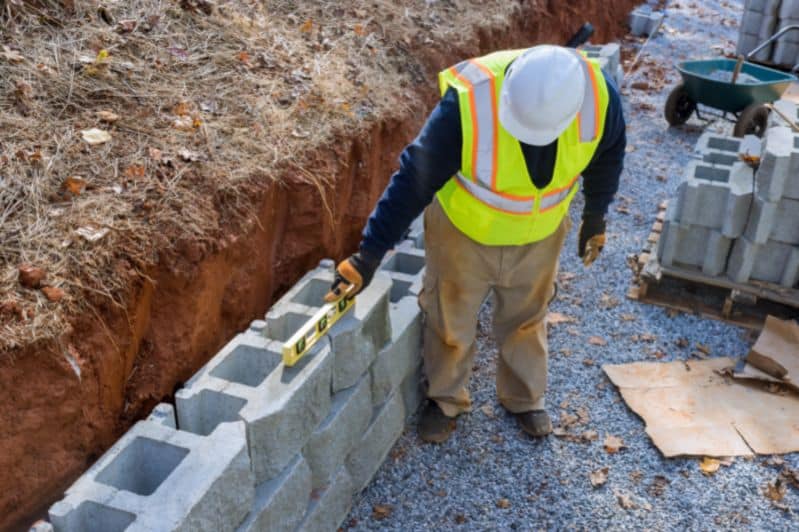
Preventing a Devastating Property Landslide in Hilly Oak Cliff
Late last spring, during a week of relentless, heavy thunderstorms, we received a panicked call from a homeowner in Oak Cliff. Their property sat on a steep grade, supported by an aging, ten-foot-tall masonry retaining wall that separated their elevated backyard from the neighbor’s driveway below. The homeowner heard a loud crack and walked out to find the massive wall leaning dangerously outward, with a large horizontal fracture running straight through the center of the mortar joints. The situation was absolutely critical; the neighbor’s cars and potentially their home were in the direct path of an imminent landslide.
Relieving Water Tension Before Total Blowout
We arrived on site within hours, equipped with heavy timber cribbing and commercial water extraction tools. The primary issue was obvious: the original builder had failed to install adequate drainage, and the wall was holding back thousands of gallons of trapped stormwater. Before we could even safely approach the face of the wall to install structural shoring, we had to relieve the tension. We carefully cored emergency weep holes at the base of the structure, allowing pressurized water to jet safely into the street. As the water drained, the immense stress on the masonry visibly relaxed. Once the hydraulic load was reduced, we installed heavy-duty diagonal braces against the face of the wall, locking it firmly into place. We turned a guaranteed catastrophic blowout into a controlled, stabilized site, completely eliminating the threat to the neighboring property.


Why Ignoring a Bowing Wall or Relying on Cosmetic Patches is Dangerous
A common and incredibly dangerous mistake property owners make is treating a leaning retaining wall as a cosmetic annoyance rather than a structural crisis. When a homeowner notices a large vertical or stair-step crack forming in the masonry, the instinct is often to hire a cheap handyman to slap some wet mortar into the gap and call it a day. This approach is functionally useless and provides a false sense of security. Patching the face of a bowing wall does absolutely nothing to address the thousands of pounds of trapped water and moving earth pushing from behind. The very next time it rains, the hydrostatic pressure will easily blast that cosmetic mortar patch straight out of the joint, and the wall will continue its downward trajectory. Furthermore, ignoring a bowing wall while waiting for a standard contractor to fit you into their schedule next month is a massive gamble. The failure curve of a compromised wall is exponential, not linear. A wall that leans one inch this week might lean six inches next week, culminating in a sudden, catastrophic collapse in the middle of the night. Do not waste your budget on superficial fixes that ignore the root cause of the structural failure. You must secure the massive load behind the wall first, prioritizing geotechnical stability over cosmetic appearances to protect your real estate investment.

Utilizing Heavy-Duty Structural Shoring and Engineered Tie-Backs
When we mobilize to an emergency retaining wall failure, we do not arrive with a few wooden two-by-fours and a sledgehammer. Stabilizing tons of shifting Dallas clay requires commercial-grade hardware and rigorous engineering principles. We utilize heavy-timber cribbing and specialized steel bracing systems designed specifically for high-capacity load transfer. Our shoring towers are built to absorb and deflect the massive lateral earth pressure pushing against the compromised structure, anchoring the failing concrete safely against the solid ground below.
Commercial-Grade Steel Deadman Anchors
In scenarios where the wall is exceptionally tall or soil saturation is severe, standard diagonal bracing is insufficient. In these critical situations, we deploy commercial-grade steel deadman anchors and helical tie-backs. We drill deep into the stable, undisturbed soil far behind the active failure zone, embedding massive steel plates or helical flights. We then run high-tensile steel rods through the face of the failing wall and tension them against the deep anchors. This mechanical system physically pulls the wall back into the hillside, using the weight of the earth itself to counteract the blowout. We specify these exact, heavy-duty materials because they are mathematically proven to halt geotechnical movement, providing absolute security while we map out the permanent reconstruction plan.
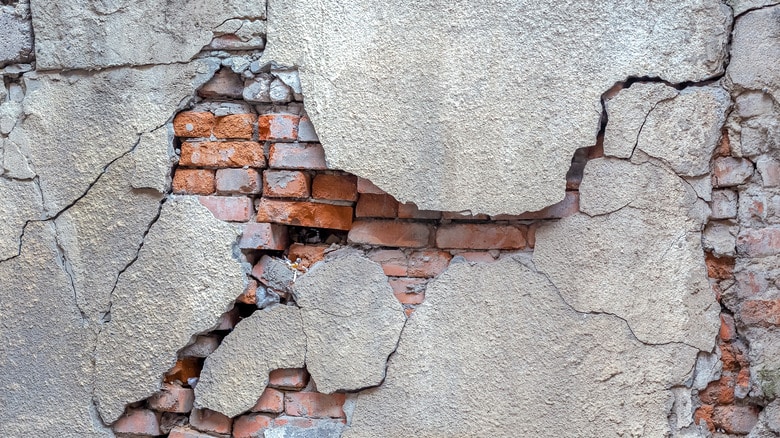
Securing Your Property Even If the Wall Has Already Started to Crumble
Homeowners often hesitate to call for emergency help because they believe the wall is too far gone. You might walk outside to find that a massive section of your masonry has already crumbled into the yard, leaving a terrifying, exposed cliff of raw dirt threatening to swallow your upper patio. You are terrified that touching the remaining structure will trigger the rest of the hillside to cave in. We have engineered our triage protocols to safely manage these exact catastrophic scenarios. We can secure your property even if the wall has already suffered a partial collapse. Our primary objective is to stop the secondary damage. We immediately establish a strict exclusion zone to keep personnel and vehicles away from the fall hazard. Then, we use our heavy equipment to safely extract the loose, shattered debris from the collapse zone without disturbing the remaining soil bank. We install heavy-duty tarps and specialized soil-nailing techniques to armor the exposed dirt cliff against further rain erosion. By carefully bracing the surviving sections of the wall and securing the raw earth, we prevent the collapse from creeping backward into your foundation or tearing down your upper fencing. We take control of the chaos, turning a terrifying disaster site into a stabilized, manageable construction zone.
Our 3-Step Emergency Retaining Wall Triage Protocol
When a landslide threatens your property, you need decisive, immediate action, not guesswork and delays. We have refined our hazard mitigation process into a strict, highly efficient protocol to ensure your property is locked down fast.
Step One is Rapid Load Transfer and Shoring.
The moment our crews arrive, we assess the failure geometry and deploy our heavy-duty steel and timber bracing. We physically prop up the leaning structure, halting its kinetic movement and ensuring the site’s safety.

Step Two: From Immediate Shoring to Permanent Reconstruction
Step Two is Hydrostatic Pressure Relief. A wall usually fails because it is drowning. We meticulously core large-diameter weep holes through the base of the concrete or masonry, carefully draining the trapped water to instantly relieve the hydraulic pressure pushing against the wall. We clear clogged drainage pipes and redirect surface runoff away from the failure zone. Step Three is Structural Rebuild and Drainage Engineering. Once the site is completely stabilized and dry, we provide a forensic breakdown of why the wall failed. We design a permanent replacement featuring proper compacted gravel backfill, advanced geogrid reinforcement, and high-capacity perforated drainage pipes, ensuring the new retaining wall easily outlasts the harsh Dallas climate.
Compliance With Dallas Geotechnical Engineering Standards
Rebuilding or significantly altering a massive retaining wall within the Dallas city limits is a heavily regulated civil engineering project. You cannot simply stack heavy blocks on a dirt footing and expect them to hold back the earth legally or safely. All of our stabilization protocols and subsequent structural rebuilds adhere strictly to the Dallas geotechnical engineering standards for mitigating lateral earth pressure.

Navigating Right-of-Way and Property Line Bureaucracy
The City of Dallas building code explicitly requires that any retaining wall over 4 feet tall must be accompanied by stamped, certified plans from a Texas-licensed professional engineer. These regulations ensure that the structure utilizes the correct thickness of steel rebar, the exact required dimensions of the concrete footing, and a mathematically verified drainage aggregate profile. Furthermore, retaining walls frequently sit directly on disputed property lines or border municipal rights-of-way, such as city alleyways or sidewalks. We handle this complex bureaucracy for you. We coordinate with the necessary structural engineers, submit rigorous load-bearing calculations to the Dallas building inspectors, and secure all required permits before permanent reconstruction begins. We ensure your property is not only physically secure from a landslide, but entirely shielded from costly municipal code violations and neighbor disputes.
Addressing Failing Masonry in Historic Districts vs. New Concrete Builds
The architectural diversity of Dallas demands a highly adaptable approach to structural shoring and repair. If we are dispatched to a historic 1930s home in the M Streets or Swiss Avenue, we are often dealing with beautifully aged, stacked-stone gravity walls. These delicate structures rely entirely on their own massive weight to hold back the earth, and they frequently lack any modern steel reinforcement. Shoring these historic walls requires extreme finesse; we use padded bracing and custom-cut timber to prevent crushing the vintage masonry, preserving as much of the original aesthetic as possible while stopping the active slide. Conversely, when we respond to a failing ten-foot poured concrete wall in a brand-new suburban development, the failure mechanism is usually drastically different. These modern walls often fail because the high-volume homebuilder improperly backfilled the wall with expansive clay instead of porous crushed rock, completely blocking the drainage systems. Repairing these massive concrete structures requires heavy-duty excavation equipment, deep helical tie-backs, and aggressive structural modifications to correct the builder’s hidden mistakes. We carry the specialized equipment and the deep technical knowledge required to handle both delicate historic preservation and heavy-duty modern civil engineering, ensuring your specific wall gets exactly what it needs.
The Dangers of DIY Retaining Wall Drainage Repairs
When a property owner notices water pooling behind a leaning wall, the immediate instinct is often to grab a shovel, dig down behind the concrete, and try to “fix the pipe” themselves. This is an incredibly dangerous DIY disaster that can lead to fatal consequences. A retaining wall that is visibly bowing is already in a state of critical failure; it is only standing because of the fragile, temporary friction between the soil packed tightly against it and the wall. When you dig a trench directly behind a failing wall, you are systematically removing the heavy earth that is counterbalancing the structure. The moment you remove that resisting friction, the wall can snap violently backward or completely blow out forward, burying you under thousands of pounds of concrete and wet mud in a fraction of a second. Never attempt to excavate behind a compromised retaining structure without professional, mechanical shoring firmly in place on the opposite side. Our heavy equipment operators and structural technicians are trained to safely manage these massive soil loads. We use the correct machinery and strict safety protocols to relieve pressure and dig out the bad soil without risking human life or triggering the exact collapse you are trying to prevent.
Recognizing the Sounds and Signs of Imminent Wall Failure
A retaining wall blowout rarely happens without warning; the structure will almost always broadcast its distress if you know what to look and listen for. The most terrifying alarm is auditory. If you are in your backyard during a quiet evening and you hear a sharp, echoing “crack” or a loud, grinding “pop” coming from your masonry, a mortar joint has just violently snapped under pressure. Visually, you must monitor the structure’s vertical alignment. Stand at the edge of the wall and look down its length; if it bows outward in the center like a swollen belly, the lateral earth pressure is actively crushing the concrete. Look closely at the weep holes located at the base of the wall. If they are bone dry during a heavy rainstorm, your drainage system has failed completely. Instead, you might see thick, heavy mud aggressively bleeding out from the vertical expansion joints, indicating that the subgrade has liquefied and is trying to force its way through the concrete seams. If you notice a sudden sinkhole forming in the grass directly behind the top of the wall, the soil is washing out from underneath your yard. When these sensory alarms occur, failure is imminent, and you must call for emergency stabilization immediately.

Protecting Your Lawn and Landscaping During Heavy Excavation
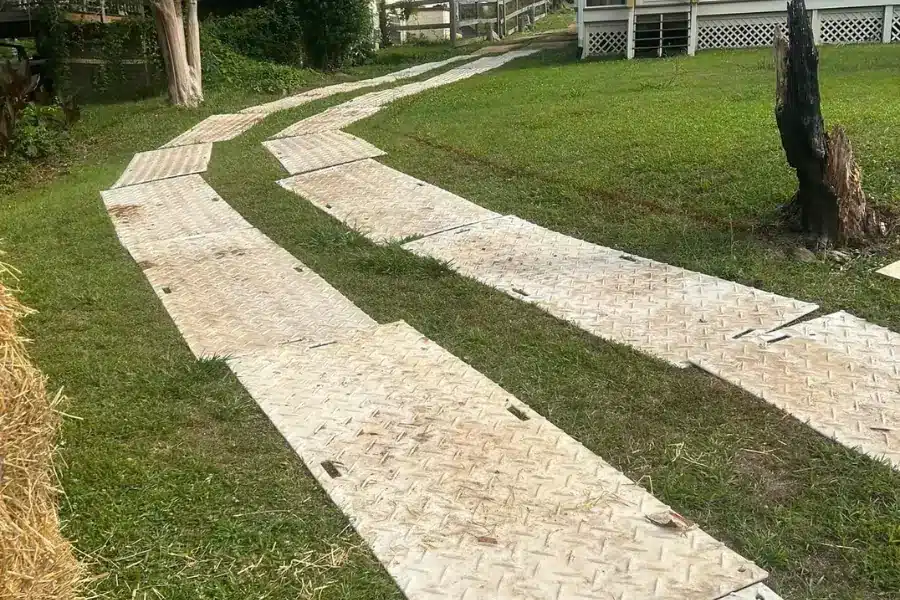
Fixing a collapsed or bowing retaining wall requires moving massive amounts of heavy concrete, steel, and saturated mud. Homeowners are understandably terrified that bringing our skid steers and mini-excavators into their backyard will completely destroy their prized landscaping, tear up their sprinkler systems, and turn their manicured lawn into a destroyed, muddy battlefield. We treat your property with the utmost respect by adhering to a strict, heavy-duty cleaning and logistics protocol. Before a single piece of machinery crosses your curb, we lay down interlocking, high-density composite ground protection mats across your grass. These commercial mats evenly distribute the weight of our heavy equipment, completely preventing deep tire ruts and soil compaction. When we excavate the saturated clay from behind your failing wall, we do not indiscriminately dump it onto your flowerbeds; we extract the mud directly into heavy-duty haul trailers or onto designated staging tarps. We wrap nearby delicate hardscaping and AC units in protective plastic to shield them from dust and concrete slurry. When the permanent wall is built and the site is secure, we power-wash the surrounding flatwork and remove our mats, leaving your yard structurally sound and immaculately clean. Our goal is to leave zero trace of our heavy machinery, ensuring your backyard remains your private sanctuary.
Transparent Costs for Emergency Shoring vs. Complete Wall Replacement
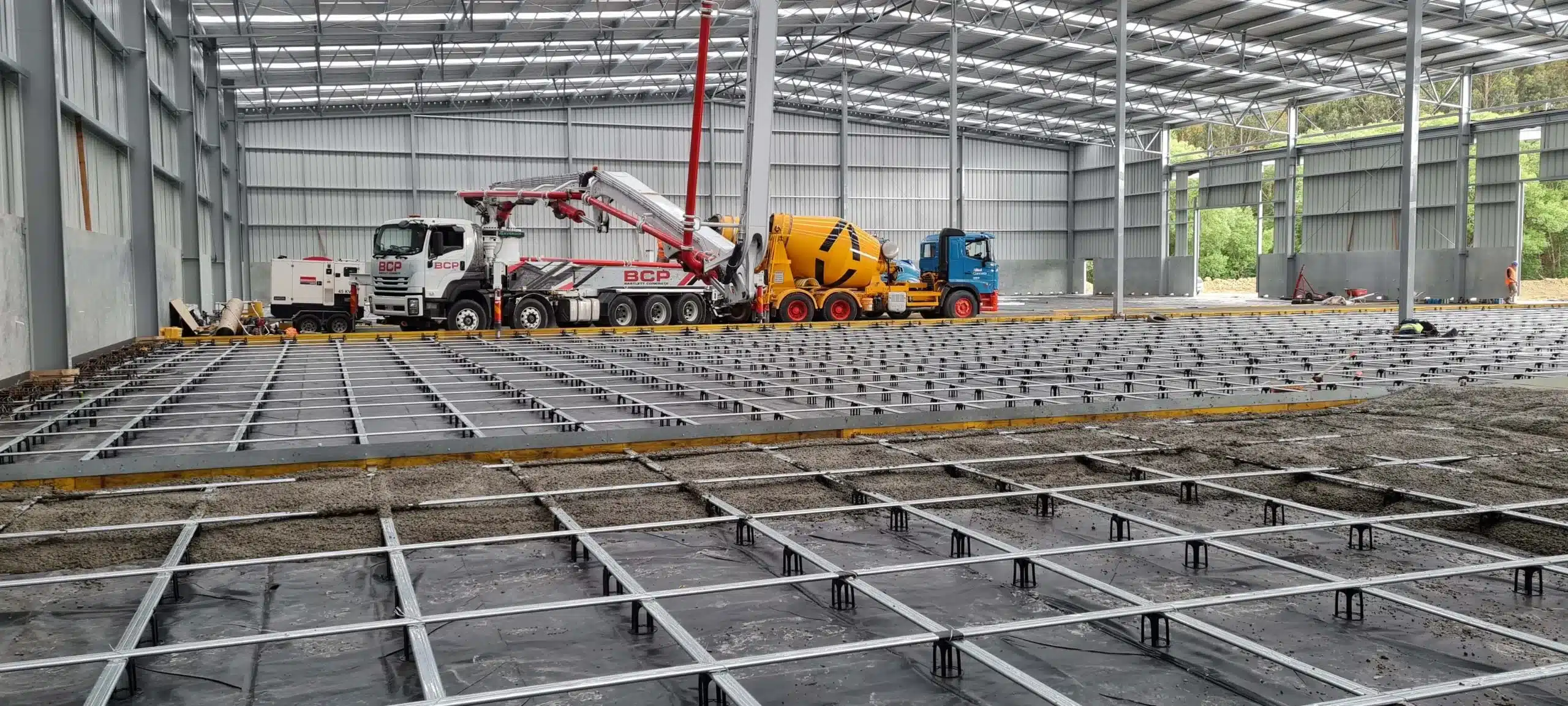
Managing a sudden property disaster requires absolute financial clarity, not open-ended contractor estimates that double in price halfway through the job. Because retaining wall failure involves two distinct phases of construction, the midnight emergency triage and the long-term structural rebuild, we use a highly transparent, split-pricing philosophy to protect your budget. When you call us to stop an active collapse during a storm, we charge a straightforward, flat diagnostic and mobilization fee for the emergency shoring and water extraction. This immediate triage locks the site down and eliminates the hazard without locking you into a massive, unseen contract. Once the hydrostatic pressure is relieved and the wall is safely braced, our estimators conduct a thorough daylight inspection of the damage. We then provide a completely separate, highly detailed, to-the-penny flat-rate quote for the permanent wall replacement. This final quote includes the engineering stamps, the excavation, the tons of crushed rock for drainage, and the final masonry build. There are absolutely no hidden hourly surprises or bait-and-switch material costs. You pay for the exact emergency stabilization you need right now, and you receive the exact financial data required to make a confident decision about the permanent repair. This ethical pricing model puts you firmly in control of your property’s financial recovery.
Your Trusted Dallas Experts for Urgent Retaining Wall Repair
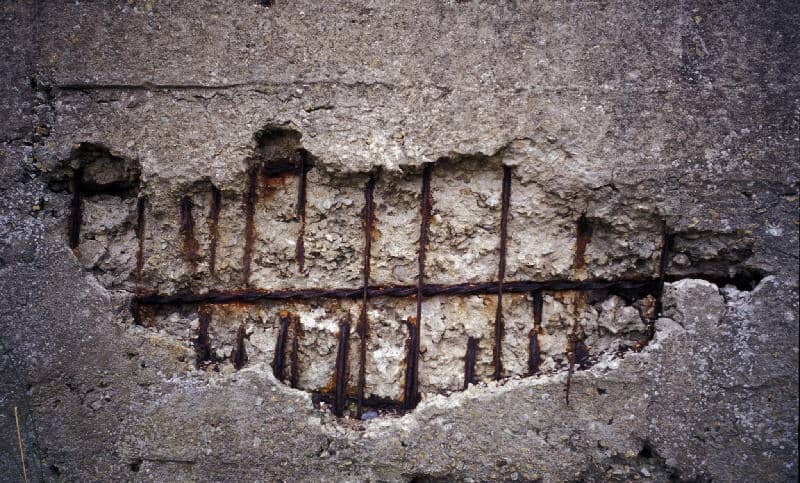
Your retaining wall is a critical piece of geotechnical infrastructure that protects your property’s elevation, foundation, and usable landscape. When the volatile clay soils of North Texas become saturated, and that wall begins to lean, crack, or bow, you are facing an imminent, devastating property landslide. You cannot afford to rely on cheap cosmetic patches, standard landscapers who lack structural engineering knowledge, or contractors who put you on a three-week waitlist. Urban Concrete & Construction is the premier technical authority for emergency retaining wall stabilization in the Dallas Metroplex. We possess the heavy-duty shoring equipment, the commercial tie-back technology, and the deep understanding of hydrostatic physics required to halt catastrophic wall blowouts instantly. We navigate the strict Dallas building codes, protect your beautiful landscaping, and provide the transparent financial clarity you need during a crisis. Do not wait for the next torrential rainstorm to completely destroy your property lines and threaten your home’s foundation. Take decisive action to relieve the pressure and secure the massive weight of the earth. Contact our Dallas dispatch hub right now to deploy our emergency structural team. We are ready to shore up your failing wall and protect your property today. Let us restore your peace of mind and the structural integrity of your landscape.
Frequently Asked Questions About Retaining Wall Emergencies
How much does emergency retaining wall shoring and stabilization cost in Dallas?
The average cost for emergency retaining wall shoring starts at $1,500 to $3,500 for initial triage and water extraction. In Dallas, this baseline mobilization fee covers deploying heavy-timber cribbing and core-drilling temporary weep holes to instantly relieve hydrostatic pressure. Urban Concrete & Construction utilizes this flat-rate triage model to halt the active landslide before providing a separate geotechnical proposal for the permanent structural rebuild.
Does Texas homeowners' insurance cover a retaining wall collapse from hydrostatic pressure?
No, standard Texas homeowners’ insurance policies typically exclude retaining wall failures caused by hydrostatic pressure, earth movement, or soil saturation. Insurance adjusters generally classify the expansion of Blackland Prairie clay as a routine maintenance issue rather than a covered sudden peril. However, if the structural blowout was directly caused by a sudden, accidental plumbing leak or a shattered municipal water main, Urban Concrete & Construction can provide the forensic geotechnical data required to support your damage claim.
Who is legally responsible when a shared retaining wall collapses on a Dallas property line?
The property owner whose land sits at the higher topographic elevation is typically legally responsible for maintaining the retaining wall. According to standard Dallas geotechnical engineering principles, the masonry structure exists specifically to hold back the upper property’s lateral earth pressure from spilling onto the lower lot. Urban Concrete & Construction frequently navigates these complex property line disputes by deploying emergency shoring on the lower elevation to protect adjacent structures while stabilizing the upper soil bank.
How long does it take the City of Dallas to approve engineering plans for a retaining wall rebuild?
It takes 10 to 15 business days for the City of Dallas Building Inspection Division to process and approve stamped engineering plans for a new retaining wall. Any load-bearing structure over four feet tall requires a formal building permit and specific structural reinforcement calculations to ensure safety. To bridge this bureaucratic delay, Urban Concrete & Construction deploys immediate, code-compliant temporary shoring to secure the hillside while our Texas-licensed professional engineers expedite the permanent municipal paperwork.
Do I need to evacuate my house if a 10-foot retaining wall is leaning toward my foundation?
Yes, you should immediately evacuate the rooms directly adjacent to the failure zone if a massive retaining wall is actively bowing toward your primary foundation. The kinetic energy of a 10-foot concrete wall collapsing can easily shatter perimeter grade beams and send thousands of pounds of saturated mud directly into a residential living space. Urban Concrete & Construction establishes a strict safety exclusion zone upon arrival, utilizing commercial-grade steel bracing to lock the structure in place so your family can safely remain on the property.
Do mature oak trees need to be removed if they are growing on top of a failing retaining wall?
Yes, mature trees situated directly within the active failure wedge of a bowing retaining wall typically must be removed to achieve permanent stabilization. The massive dead weight of the timber canopy, combined with an aggressive root system that actively clogs the subterranean drainage aggregate, severely multiplies the lateral load on the masonry. Urban Concrete & Construction coordinates tree extraction safely from the upper grade, ensuring the heavy root ball is removed without triggering a sudden blowout of the fragile concrete below.
How many years do steel helical tie-backs last in Dallas Blackland Prairie clay?
Galvanized steel helical tie-backs are engineered to last 50 to 75 years, even in the highly corrosive, shifting environment of the Dallas Blackland Prairie clay. These commercial anchors bypass the volatile, moisture-sensitive topsoil and embed directly into deep, stable load-bearing strata. Urban Concrete & Construction utilizes these heavy-duty steel tension rods to physically pull leaning concrete walls back into the hillside, providing a permanent mechanical counter-force that vastly outlasts traditional gravity wall construction.
How long does it take to install emergency timber shoring and weep holes?
It takes 2 to 4 hours for our emergency crews to completely core the weep holes and erect the heavy timber cribbing needed to secure a collapsing wall. The exact timeframe depends on the severity of the trapped hydrostatic pressure and the linear footage of the failing masonry. Urban Concrete & Construction arrives with pre-cut structural timber and high-capacity water-extraction tools, allowing us to halt the active property slide and secure the failure zone during the same shift you call us.