
Fill Dangerous Subterranean Voids Before Your Dallas Driveway Collapses
We use eco-friendly, hydro-insensitive polyurethane to permanently stabilize soil subsidence caused by the shrinkage of Dallas Vertisol clay.
Subterranean Void Filling and Slab Stabilization in Dallas
When subterranean erosion creates dangerous voids beneath your driveway or patio, we deploy high-density polyurethane foam injection to permanently fill them. This advanced polymer completely stabilizes the soil, restores structural load transfer, and prevents heavy concrete slabs from collapsing into sinkholes.
A suspended concrete slab is a structural disaster waiting to happen. Most residential flatwork is engineered to rest directly on compacted soil. When that soil washes away or shrinks, the concrete is forced to act as a bridge spanning dead air. Eventually, the immense dead weight of the concrete, combined with the dynamic load of a parked vehicle, will cause the slab to snap violently in half. We eliminate this threat instantly. Instead of tearing out your entire driveway and starting from scratch, we inject a two-part polyurethane polymer directly into the subterranean cavities. This material expands aggressively, seeking out the path of least resistance to fill every microscopic crevice before hardening into a rock-solid structural base. By filling the void, we re-establish the critical load-bearing contact between your concrete and the earth below, saving your expensive flatwork from inevitable destruction and saving you thousands of dollars in replacement costs.

Rescuing a Suspended Preston Hollow Pool Deck
Late last July, right at the peak of the Texas heatwave, we received an urgent call from a homeowner in Preston Hollow. They were hosting a massive summer party that weekend, but while cleaning around the pool, the owner noticed a massive, dark gap had opened up between the coping and the surrounding grass. The soil had contracted so severely that a six-foot section of their heavy cantilevered concrete pool deck was literally floating in mid-air over a deep subterranean cavern.
Securing a Suspended Pool Deck Fast
The homeowner was absolutely terrified that if a group of guests stood on that section, the slab would shear off and collapse into the void, potentially causing severe injuries and destroying the expensive pool shell. Standard contractors told him it would take weeks to permit and pour a new deck. We arrived the next morning with our self-contained injection rig. Our technician strategically mapped the cavern and drilled three small, penny-sized holes through the deck. We injected our high-density polyurethane, watching the foam rapidly expand and pack the empty space tightly against the underside of the concrete. Within two hours, the cavern was completely eliminated, the load transfer was fully restored, and the party went off without a hitch.


Why Traditional Mudjacking Destroys Failing Subgrades
For decades, the only way to fill a void or lift a sunken slab was a messy process called mudjacking. Unfortunately, many outdated contractors in the Dallas area still rely on this archaic method. Mudjacking involves pumping a heavy, wet slurry of topsoil, sand, and cheap cement directly into the sinkhole. While this temporarily fills the gap, it introduces a catastrophic flaw: massive dead weight.
The Heavy Weight Problem of Mudjacking
A standard mudjacking slurry weighs roughly 100 to 120 pounds per cubic foot. If the original soil subsided because it was too weak to hold the weight of your driveway, pumping thousands of pounds of heavy, wet mud into that exact same spot is a guaranteed recipe for failure. The immense additional weight simply accelerates sinking, driving the slab deeper into the saturated clay. Furthermore, mudjacking slurry is not waterproof. The next time a heavy thunderstorm hits, the water washes the mud right back out from under the concrete. We refuse to use this destructive method. Our advanced polymers solve the problem without adding damaging weight to a compromised subgrade.

The Science Behind High-Density Polyurethane Foam
We protect your concrete by utilizing highly engineered chemical solutions. Instead of heavy mud, we deploy AP Lift 430, a closed-cell, high-density polyurethane foam explicitly formulated for soil stabilization and slab jacking. This structural polymer weighs approximately 2 to 4 pounds per cubic foot, a fraction of the weight of traditional mudjacking materials yet it yields immense compressive strength capable of supporting heavy commercial vehicles and massive structural footings. When the two liquid components mix at the injection nozzle, a rapid chemical reaction occurs. The polymer expands aggressively up to 20 times its liquid volume, forcefully seeking out the path of least resistance. It drives deep into microscopic soil fractures, aggressively compacting the surrounding loose dirt before filling the primary void entirely. Because it is a closed-cell material, it creates an impenetrable, rigid matrix that completely rejects water infiltration. This means that even if a flash flood rushes through your property, our polyurethane foam will never wash away, degrade, or lose its structural integrity. It permanently alters the geotechnical reality of your subgrade.

NSF 61 Environmental Certifications and Aquifer Safety
When injecting chemical polymers deep into the ground, environmental safety is a critical concern, especially in a heavily populated municipality like Dallas. Homeowners rightfully worry that expanding foams might leach toxic chemicals into their soil, contaminate their landscaping, or violate local environmental regulations. We guarantee absolute environmental compliance. The high-density polyurethane materials we utilize are hydro-insensitive and strictly tested for ecological safety. In fact, our specific polymers carry the stringent NSF/ANSI 61 certification for contact with potable drinking water systems. This means the material is mathematically proven to emit zero harmful Volatile Organic Compounds (VOCs) and will absolutely not leach toxins into the surrounding earth. It is completely safe to deploy directly adjacent to Dallas municipal water lines, sensitive aquifer recharge zones, and expensive residential landscaping. You get industrial-grade structural stabilization without introducing hazardous pollutants into your family’s backyard or triggering violations with the Dallas Environmental Compliance Offices.
Our 3-Step Precision Soil Stabilization Process
Repairing a subterranean cavern requires surgical precision, not brute force. We have engineered a strict, three-step customer journey to move your property from a state of structural danger to permanent stability within hours.

Step One is Sub-Slab Void Mapping.
Our technicians conduct a forensic assessment, using specialized sounding rods and digital elevation levels to map the exact perimeter and depth of the hidden sinkhole beneath your concrete.

Step Two is Precision Drilling and Foam Injection.
We drill a strategic grid of 5/8-inch holes through the slab, roughly the diameter of a penny. We then insert specialized injection ports and pump the heated polyurethane directly into the void.

Step Three is Instant Load Transfer and Hole Sealing.
You will literally feel the slab solidify as the foam packs tightly against the underside of the concrete. Once the pressure is perfectly equalized, we remove the ports, clean the surface, and patch the tiny drill holes with a specialized, color-matched cementitious grout. The site is instantly ready for use.
Safe Void Filling Around Fragile Cast Iron and PVC Plumbing
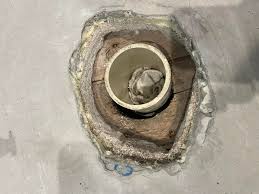
One of the most common reasons homeowners delay void filling is the fear of collateral damage to their buried utilities. You know there is a massive sinkhole under the slab, but you are terrified that pumping expanding foam into the ground will crush the fragile PVC sprinkler lines or shatter the aging cast-iron sewer pipes running directly underneath your driveway.

Protecting Buried Utilities During Expansion
Our process is completely safe, even if your plumbing runs straight through the subterranean void. The chemical expansion of our polyurethane foam is highly controlled and directional. Unlike a hydraulic press that crushes everything in its path, the foam expands and flows around obstacles, gently encapsulating pipes rather than snapping them. It actually provides a protective, insulated shock-absorbing layer around your buried utilities. Furthermore, we utilize ground-penetrating radar principles and fiber-optic camera inspections when necessary to map the exact locations of your water and sewer lines before we drill a single hole. We ensure the structural void is filled entirely while maintaining the absolute integrity of your home’s critical infrastructure.
Securing 1980s Tract Homes vs. Luxury Cantilevered Patios
The housing stock across the Dallas Metroplex varies wildly, and our void-filling techniques adapt to the specific engineering of your flatwork. If we are dispatched to a 1980s tract home in Garland or Plano, we typically encounter four-inch driveway slabs poured directly on dirt without any steel rebar reinforcement. These unreinforced slabs are incredibly fragile; if a void forms, they snap almost immediately. Our intervention here focuses on rapid, high-volume injection to support the brittle concrete before a massive spiderweb crack destroys the entire approach. Conversely, when we work on high-end luxury properties in Preston Hollow or Highland Park, we frequently encounter massive, custom cantilevered concrete patios and heavy architectural pool decks. These structures are heavily reinforced but carry immense dead weight. Securing these slabs requires highly calculated, multi-stage foam injections to ensure the heavy structural loads are perfectly distributed across the expanding polymer matrix without accidentally lifting or twisting the custom stonework out of alignment.
The Sensory Alarms of Subterranean Concrete Voids
You rarely see a sinkhole forming until it is too late, but your property will give you distinct physical warnings if you know how to interpret them. The most common alarm is auditory.
Listening for the Hollow Drum Echo
If you walk across your concrete patio or bounce a basketball on your driveway and it produces a sharp, high-pitched “ping,” the concrete is resting firmly on solid dirt. But if you hit a section and it suddenly produces a deep, echoing, hollow “thud” or sounds like you are striking a bass drum, you have discovered a massive subterranean void. Visually, you might notice small, unexplained piles of dirt washing out onto the street after a heavy rain, or you might see the terrifying sight of neighborhood rodents, possums, or armadillos actively tunneling into a dark gap exposed right along the edge of your concrete porch. You might even feel a slight, unsettling vibration or “give” when you drive your heavy vehicle over a specific corner of the driveway approach. These sensory cues are your concrete warning to stabilize immediately before it fractures.
Providing Forensic Assurance for Panicked Homeowners
We built this specialized void-filling service exactly for the homeowner who just walked outside, looked down the edge of their driveway, and realized they can see daylight shining all the way through to the other side. You are staring at a massive, empty cavern where solid dirt used to be, and you are terrified that driving your family vehicle into the garage tonight will cause the entire slab to cave in. You don’t want a generic contractor guessing at the problem; you need forensic, mathematical assurance that the threat is neutralized. You are our ideal client because we provide absolute transparency. We explain exactly how many cubic feet of soil have washed away, we calculate the precise density of the polymer required to replace it, and we prove that the load transfer is restored before we leave. We replace the panic of the unknown with the hard science of geotechnical stabilization, ensuring you can sleep soundly knowing the ground beneath your home is locked firmly in place.

The Minimum Invasive Approach to Preserving Your Landscaping
A major reason property owners dread concrete repair is the extensive damage it usually causes to their carefully manicured property. Traditional mudjacking requires dragging heavy, leaking hoses across your lawn and drilling massive, two-inch core holes through your beautiful decorative concrete, which look like terrible, permanent scars once patched. We respect your property by deploying a strictly “Minimum Invasive” methodology. Our polyurethane injection process requires only a 5/8-inch drill hole, which is virtually invisible once filled with our custom-blended patching grout. Our specialized box trucks remain parked safely on the street, and we run a single, clean, heated hose directly to the injection site. We do not destroy your grass with heavy machinery, we do not splash messy concrete slurry against your brick veneer, and we do not leave a toxic mess for you to clean up. We execute heavy-duty structural stabilization while treating your residential property with surgical care and absolute cleanliness.

Transparent Estimates Based on Exact Material Density
The most frustrating aspect of hiring a contractor for underground repair is the fear of signing an open-ended contract. Because the void is hidden beneath the concrete, shady contractors often invent arbitrary hourly rates or suddenly triple the price once the job begins, claiming the hole was “bigger than expected.” We completely reject this unethical pricing model.
Exact Estimates Based on Material Density
We provide transparent, flat-rate pricing based entirely on the exact physical weight of the polyurethane material required to stabilize your specific soil failure. During our initial diagnostic visit, we measure the volumetric dimensions of the subterranean sinkhole. We then quote the job based on the precise pounds of high-density foam needed to completely fill that space and achieve total compaction. There are no hidden mobilization fees, no arbitrary hourly labor charges, and absolutely no bait-and-switch tactics. You pay for the exact chemical density required to secure your concrete, giving you complete financial predictability and peace of mind before we ever pull the trigger on the injection gun.
Your Dallas Experts for Rapid Polyurethane Void Filling
Your concrete flatwork is a major financial investment, and leaving it suspended over an expanding sinkhole is a risk you cannot afford to take. When the severe contraction of Dallas Vertisol clay threatens to collapse your driveway, patio, or pool deck, you need a contractor with the exact geotechnical expertise to fight back. Urban Concrete & Construction is the leading authority in North Texas for advanced polyurethane void filling and soil stabilization. Dispatched centrally from our McCallum Blvd hub, we utilize eco-friendly, high-density polymers to permanently arrest subterranean erosion without the mess and heavy weight of outdated mudjacking. We understand the physics of your soil, we respect your property’s aesthetic, and we guarantee rapid load transfer to keep your slabs intact. Do not wait for the concrete to snap under the weight of your vehicle. Take immediate action to secure the ground beneath your feet. Contact our Dallas dispatch team now to schedule a comprehensive void assessment and let us permanently stabilize your property.
Frequently Asked Questions About Concrete Void Filling
How much does polyurethane concrete void filling cost in Dallas?
The average cost is $5 to $25 per square foot, or roughly $150 per drill hole, depending on the severity of the subterranean erosion. In Dallas, the final price is dictated by the exact pounds of high-density polyurethane foam required to achieve total subgrade compaction. Urban Concrete & Construction utilizes digital volumetric mapping to provide an exact, upfront estimate rather than charging open-ended hourly rates for slab stabilization.a
Does Texas homeowners' insurance cover concrete sinkhole repair?
No, standard Texas homeowners’ insurance policies categorically exclude earth movement, soil subsidence, and the resulting concrete void filling. Insurance adjusters classify the natural shrink-swell cycle of Blackland Prairie clay as a routine maintenance issue. However, if the subterranean void was washed out by a sudden, accidental plumbing leak from a covered municipal water line, Urban Concrete & Construction can provide the forensic documentation needed for your damage claim.
How long does polyurethane foam take to cure before I can drive on it?
It takes exactly 15 minutes for the expanding polyurethane polymer to reach 90% of its full compressive strength. Unlike traditional mudjacking slurries that require days of undisturbed drying time, our hydro-insensitive foam cures almost instantly beneath the slab. Urban Concrete & Construction guarantees you can safely park a 6,000-pound SUV on your newly stabilized driveway on the very same day we execute the injection.
Can polyurethane foam lift a sunken Dallas driveway back into place?
Yes, high-density polyurethane foam generates an immense expansive force capable of performing precise structural slab jacking. Once the primary subterranean void is completely filled and the loose soil is compacted, continued polymer injection applies upward hydraulic pressure against the bottom of the concrete. Urban Concrete & Construction uses laser levels to carefully manipulate this expansion, lifting the sunken flatwork back to its original engineered grade.
Should I fix an under-slab plumbing leak before filling the concrete void?
Yes, you must have a licensed plumber repair the ruptured PVC or cast iron pipe before injecting high-density foam. If you execute the void filling while a pressurized water line is still actively leaking, the hydro-insensitive polymer will permanently encapsulate the broken pipe, making future plumbing repairs incredibly destructive and expensive. Urban Concrete & Construction coordinates directly with your plumber to stabilize the surrounding soil immediately after the leak is officially sealed.
Will expanding polyurethane foam kill the oak tree roots under my patio?
No, our closed-cell polyurethane foam is completely inert and will not kill or poison mature tree roots. Because the polymer carries the NSF 61 certification for environmental safety, it emits no toxic VOCs into the surrounding soil profile. Urban Concrete & Construction safely injects this eco-friendly material to fill voids around the root systems of your Dallas landscaping without harming the tree’s natural water-absorption capabilities.
Do I need a City of Dallas permit to fill a void under my driveway approach?
No, standard subterranean void filling via polyurethane injection does not require a Right-of-Way permit from the City of Dallas. Because our “Minimum Invasive” method utilizes a 5/8-inch drill hole and does not involve demolishing the concrete or excavating the municipal street curb, it is classified as a maintenance repair. Urban Concrete & Construction executes stabilization quickly without getting trapped in the city’s bureaucratic permitting backlog.
How many years does polyurethane void filling last in Texas clay?
It lasts 15 years indefinitely because the closed-cell polymer will never degrade, rot, or wash away in the soil. While traditional mudjacking mixtures easily erode during North Texas flash floods, our specialized foam permanently alters the geotechnical matrix beneath the slab. Urban Concrete & Construction guarantees that the injected material will permanently resist the hydrostatic pressure and shifting nature of Dallas Vertisol clay.