
Restore Heavy Forklift Traffic To Your Dallas Warehouse Within 2 Hours.
We utilize advanced industrial polyurea compounds to permanently repair warehouse flooring, allowing heavy machinery to safely resume operation the same day.
Urgent Commercial Concrete Slab Repair and Control Joint Stabilization in Dallas
When severe spalling and shattered control joints halt your industrial operations, waiting days for concrete to dry is not an option. We provide urgent commercial concrete slab repair in Dallas, utilizing rapid-curing industrial polyurea to permanently stabilize your floors and allow heavy forklift traffic to resume in just two hours.
In the high-stakes logistics sector, a damaged warehouse floor is not merely a cosmetic annoyance; it is a critical structural bottleneck that directly impacts your bottom line. Every minute a loading dock or a primary forklift aisle remains closed, your facility bleeds revenue through delayed outbound shipments, rerouted traffic, and drastically decreased pick-rates. Furthermore, ignoring failing concrete flatwork exponentially increases the wear and tear on your expensive material handling equipment, destroying forklift wheels and risking catastrophic drops of palletized goods. Our commercial repair teams specialize exclusively in high-traffic, heavy-load environments. We understand that your supply chain cannot afford a standard contractor’s leisurely timeline. By deploying specialized high-early-strength concrete and advanced polymer compounds, we completely bypass the archaic curing wait times that plague the local construction industry. We surgically remove the compromised material, inject our structural compounds, and shave the repair perfectly flush with the surrounding slab. This precision engineering restores the continuous, smooth transit surface your operators demand, protecting both your personnel and your rolling assets while ensuring your Dallas facility maintains its absolute maximum operational velocity safely and effectively.
Restoring a Dallas Design District Logistics Center During the Lunch Shift
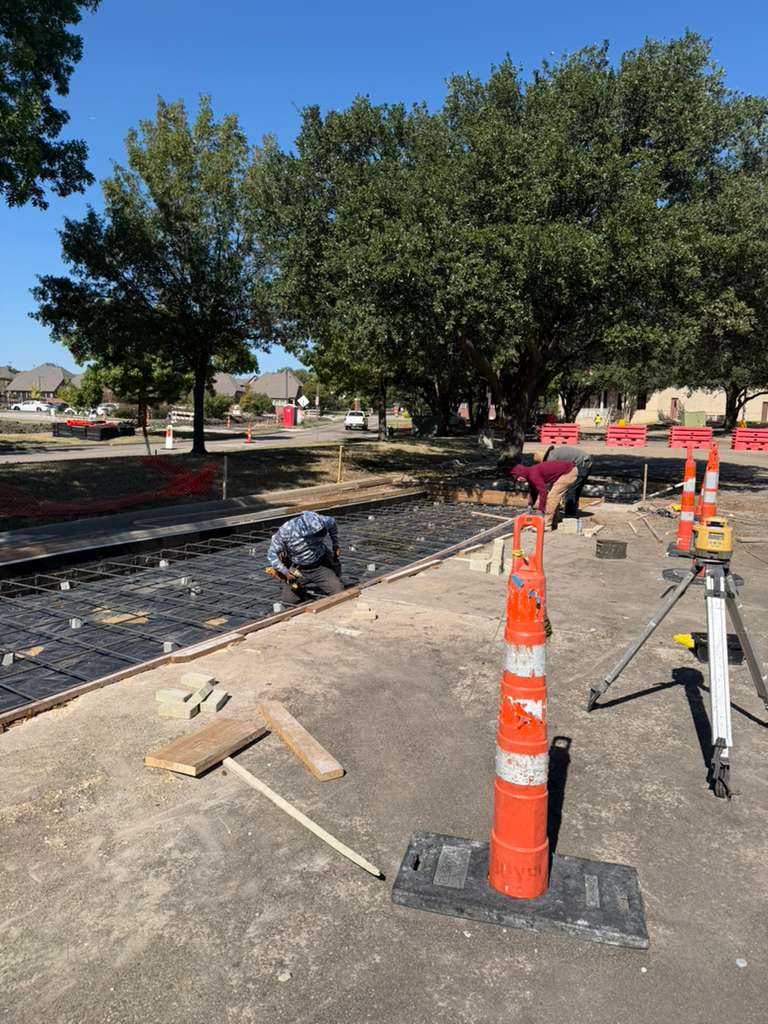
Just last quarter, we received an emergency dispatch from a high-volume logistics center operating right on the edge of the Dallas Design District. A primary transit aisle leading directly to their busiest loading dock had developed a massive, jagged spall along a critical control joint. Every time a reach truck passed over the crater with a heavy load, the mast swayed violently, threatening to dump thousands of dollars of fragile electronics onto the concrete. The facility manager was desperate but stated categorically that shutting down the aisle for a traditional two-day repair would paralyze their outbound shipping quota for the entire week.
Saving the Third-Shift Logistics Flow
We arrived at 11:30 AM, precisely as their main warehouse crew went to lunch. We immediately cordoned off the specific section, deployed our dustless routing equipment, and carved out the shattered concrete back to a solid, structural base. We injected our rapid-curing industrial polyurea and overfilled the joint to ensure absolute density. By 1:00 PM, the compound had reached its full cure. We shaved the excess material perfectly flush, swept the aisle, and removed the barricades. When the operators returned from their break, the hazardous crater was entirely gone, replaced by a perfectly flat, immovable transit path. They hit their shipping quota without missing a single outbound truck.
Why Traditional Concrete Patches Cause Unacceptable Operational Downtime
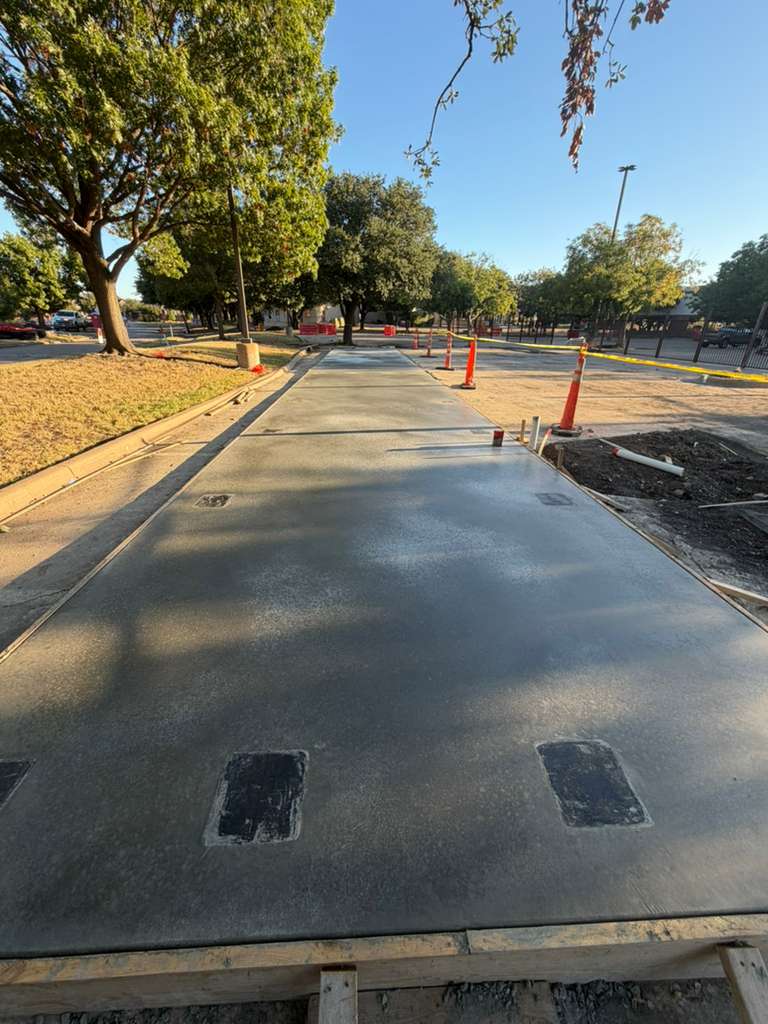
A glaring weakness in the Dallas commercial contracting market is the reliance on residential repair methods for heavy-industrial problems. When a facility manager calls a standard concrete company to fix a loading dock, the contractor usually arrives with buckets of standard wet mortar or basic cementitious patches. This approach creates massive, unacceptable operational downtime for your business. Standard concrete requires a minimum of 7 to 14 days of undisturbed curing time before it can safely handle the shear forces and weight of heavy machinery. The contractor will throw up yellow tape, physically blocking your access to critical square footage and forcing your warehouse team to navigate inefficient detours for weeks. Even worse, because standard concrete has absolutely no flexibility, it cannot bond properly with the shifting slabs of an active warehouse. The moment you finally drive a forklift over that week-old patch, the vibration and thermal movement will instantly snap the rigid mortar, popping the patch entirely out of the hole. You sacrifice weeks of operational capacity just to end up with the exact same trip hazard you paid to fix. We bridge this massive gap by utilizing advanced chemistry that actually respects your production schedule.
The Structural Superiority of Rapid-Curing Industrial Polyurea
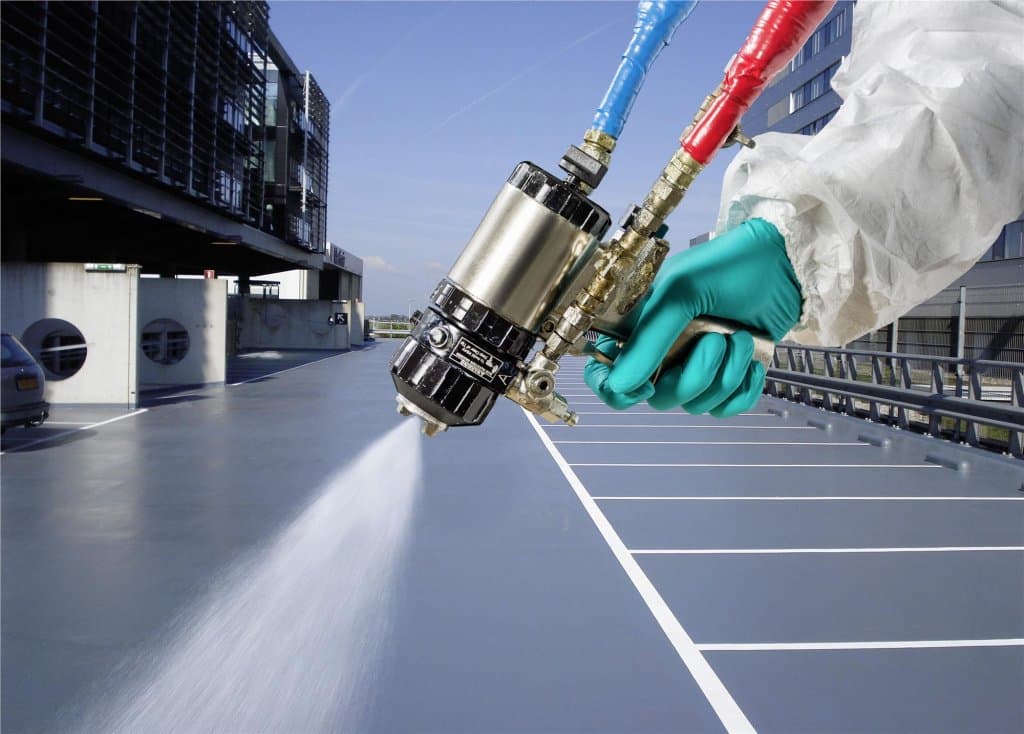
In the high-stakes environment of B2B facility maintenance, the chemical composition of your repair materials dictates your long-term success. We categorically reject cheap, off-the-shelf hardware store epoxies and rigid cement mixtures. Instead, we utilize specialized industrial polyurea compounds specifically formulated for heavy-duty commercial environments. Polyurea is an elastomer that offers a radical advantage over traditional materials: extreme flexibility combined with massive load-bearing capacity.
High-Early-Strength Concrete vs. Standard Industrial Epoxy
While standard industrial epoxy cures into a rigid, glass-like plastic that easily shatters under the vibration of a passing forklift, our polyurea cures into a dense, hard-rubber consistency. This specific shore hardness allows the repaired joint to flex slightly as the massive concrete slabs expand and contract in the Dallas heat, while also supporting the crushing point load of a loaded pallet jack. Furthermore, our compounds are moisture-insensitive and chemically engineered for rapid deployment. They transition from a liquid state to a fully cured, traffic-ready solid in less than fifteen minutes. When combined with our high-early-strength concrete aggregates for deeper structural voids, we deliver a permanent, immovable repair that absorbs impact rather than fighting it, guaranteeing your material handling equipment glides smoothly across the floor.
Executing Heavy-Duty Floor Repairs Even If Your Facility Operates 24/7
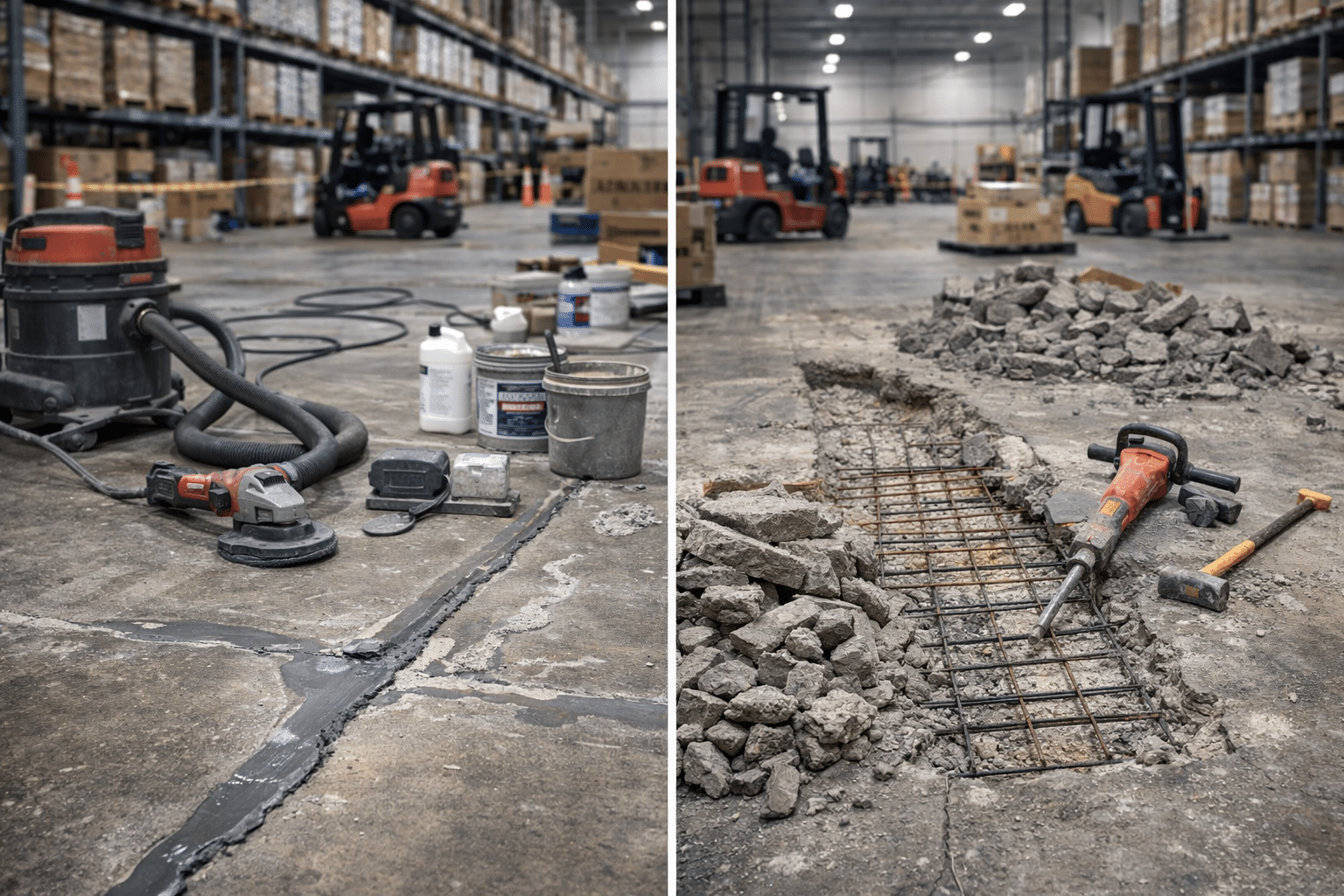
A common objection we hear from commercial supply chain directors is the absolute impossibility of shutting down. You might manage a 24/7 cold-storage facility or a high-velocity e-commerce fulfillment center, where halting a sorting line for even a few hours can cost tens of thousands of dollars. You know the floors are failing, but you assume a structural repair is logistically impossible without halting your operations completely. We have engineered our commercial dispatch protocols to eliminate this exact fear. We execute heavy-duty floor repairs even if your facility operates around the clock. We do not demand an empty warehouse to do our jobs. Our B2B repair teams are highly trained to work in active, dynamic industrial environments. We coordinate directly with your shift supervisors to isolate incredibly small micro-zones, sometimes just a single ten-foot section of a specific aisle, at any hour of the day or night. We can deploy our technicians during your lowest-volume traffic windows, working surgically to rout, fill, and shave the damaged concrete while your forklifts safely operate in the immediately adjacent lanes. We adapt our construction schedule to your production schedule, not the other way around.
Our 3-Step Process for Two-Hour Traffic Resumption
We do not guess when it comes to industrial downtime; we execute a mathematically precise, three-step customer journey designed to get your heavy machinery rolling again in exactly 120 minutes.
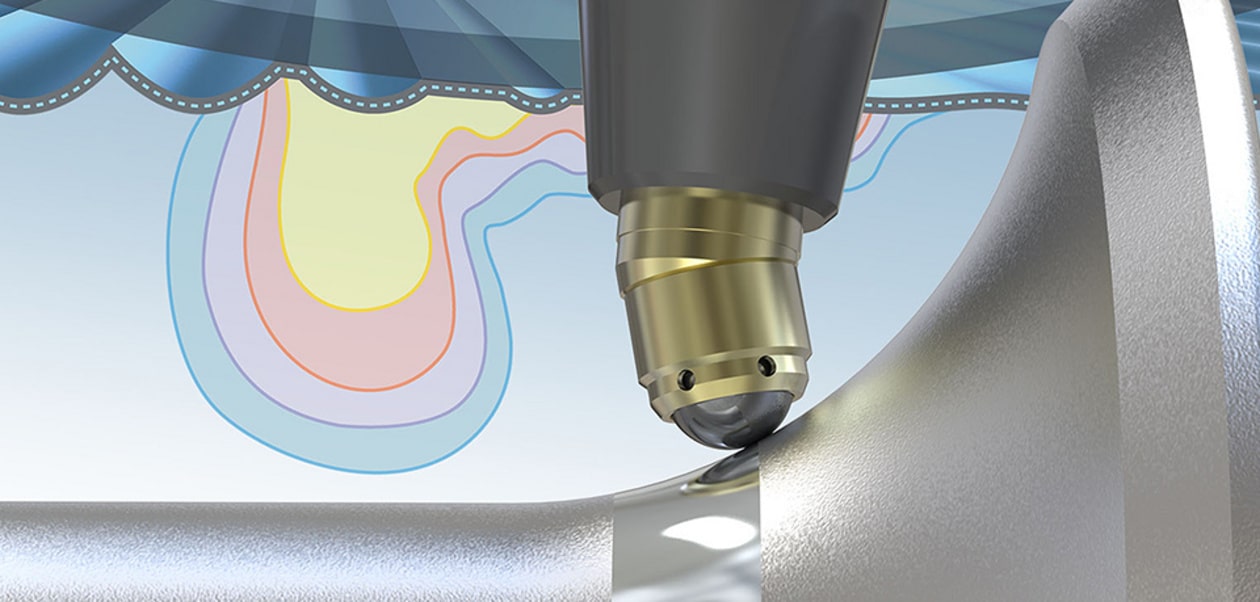
Step One is the Deep Mechanical Surface Routing.
We don’t just pour chemicals over dirty, broken concrete. Our technicians utilize specialized V-blade diamond saws to chase the crack, cutting deep into the slab to remove all loose debris, contaminated edges, and failing sealant, exposing the clean, raw concrete matrix necessary for absolute molecular adhesion.
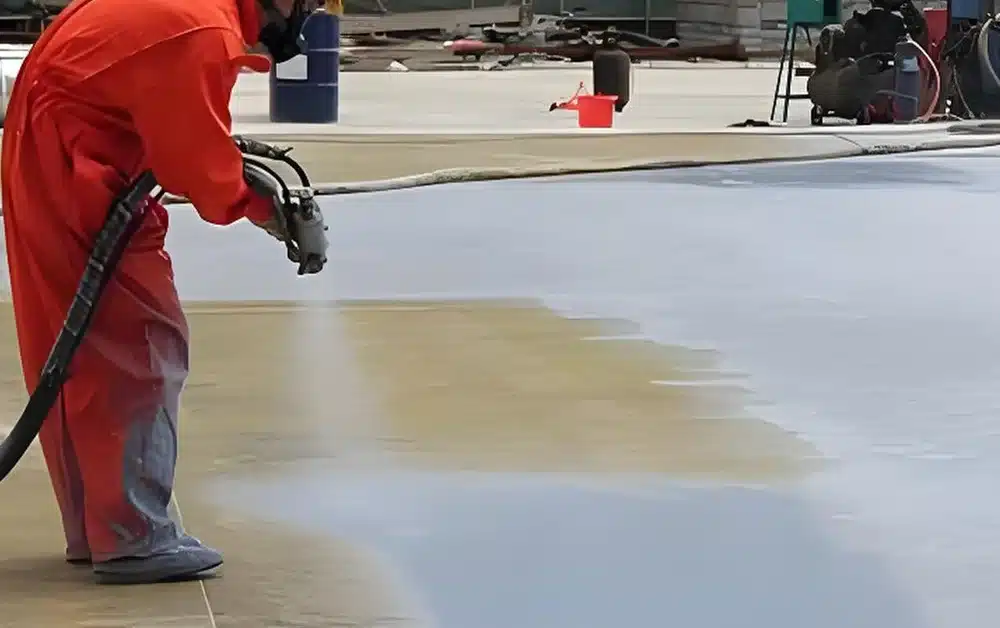
Step Two: Deep Mechanical Surface Routing and Flush Shaving
Step Two is the Polyurea Injection and Overfill. We use plural-component mechanical pumps to inject the heated industrial polyurea directly into the routed void from the bottom up, preventing any trapped air pockets. We deliberately overfill the joint, allowing the expanding polymer to crown slightly above the slab surface. Step Three is the Flush Shaving to resume immediate traffic. Exactly fifteen minutes after injection, the material cures. We deploy heavy-duty floor scrapers to slice the crowned polyurea perfectly flush with the adjacent concrete panels. The result is a perfectly flat, zero-bump transition that is instantly ready to support 10,000-pound forklift loads the moment we pack up our tools.
Exceeding Dallas Building Code for Heavy-Industrial Compressive Strength
When executing structural repairs in a commercial facility, regulatory compliance and verifiable engineering metrics are non-negotiable. You cannot simply guess whether a patch will hold the weight of your operations. All of our commercial slab interventions strictly adhere to, and vastly exceed, the structural mandates outlined in the City of Dallas Building Code for commercial and industrial zones. We don’t rely on hope; we rely on proven material science.
Meeting 4,000 PSI Load Requirements
The municipal code requires that heavy-industrial concrete flatwork maintain a minimum compressive strength of 4,000 PSI to safely handle commercial vehicle traffic and stationary racking point loads. Our rapid-curing industrial polyurea and high-early-strength concrete patches are independently tested and certified to yield compressive strengths far exceeding these baseline municipal requirements, often reaching 5,000 PSI or greater within hours of application. This immense structural density ensures that our repairs will not crush, deform, or delaminate under the extreme weight of your fully loaded material-handling equipment. We provide the technical data sheets and engineering specs necessary to satisfy your corporate safety officers, your insurance underwriters, and local building inspectors.
Repairing 1980s Tilt-Wall Plants vs. Modern Mega-Distribution Centers
The commercial real estate landscape in the Dallas Metroplex spans decades, and the architectural differences among buildings require distinct forensic repair strategies. If we are dispatched to a legacy 1980s tilt-wall manufacturing plant in the Trinity River industrial corridor, we are usually dealing with severely aged slabs that have endured forty years of heavy machine vibration and chemical spills. These older floors often suffer from widespread surface delamination and require deep structural routing, massive aggregate backfill, and aggressive joint reconstruction to safely support modern, heavier equipment. Conversely, when we respond to a newly built, one-million-square-foot mega-distribution center down in South Dallas, the problems are entirely different. These massive modern facilities often experience premature joint curling and minor edge spalling simply because the freshly poured concrete cured too rapidly in the Texas summer heat before the facility was fully enclosed. In these modern environments, our focus shifts to rapid, surgical polyurea injections that stabilize the curling panels and lock the control joints in place before high-speed automated guided vehicles begin to sustain damage from the uneven transitions. We deploy specific heavy-duty materials designed for the concrete’s exact age.
The Severe Danger of Cheap Self-Leveling Underlayment Patches
The absolute fastest way to waste your commercial maintenance budget is to allow a generic facility handyman to attempt a structural concrete repair using retail-grade products. A rampant, dangerous stereotype in the local industry is the “maintenance guy” who tries to fix a massive, jagged pothole in the loading dock by pouring a bucket of cheap, self-leveling underlayment directly into the crater. Self-leveling compounds are designed exclusively for indoor residential applications, such as smoothing a bathroom floor before laying tile. They possess absolutely zero structural compressive strength and no resistance to point-load impact. When you pour this watery mixture into an industrial spill, it may look gray and flat for a few hours, but it is, in fact, a cosmetic illusion. The very first time a hard-wheeled forklift rolls over that patch with a loaded pallet, the brittle underlayment will instantly shatter into sharp, dangerous shrapnel. Those flying shards can puncture tires, damage nearby equipment, and create a massive slipping hazard for your employees on the warehouse floor. Stop masking industrial failures with residential cosmetics. Secure your facility with heavy-duty polymers engineered specifically to withstand the violent forces of commercial logistics.
The Destructive Impact of Damaged Joints on Your Palletized Inventory
In a warehouse environment, you don’t just see a broken concrete joint; you feel it, and you hear it constantly. It is the jarring, violent, metal-on-concrete “clack” that echoes across the facility every time a forklift driver hits the ruined transition. It is the sudden, dangerous vibration transferring straight up the steering column, jarring the operator’s spine and causing cumulative ergonomic injuries that lead to expensive workers’ compensation claims. But beyond the physical toll on your team, it is the terrifying sight of a towering, 20-foot mast swaying wildly as the reach truck dips into the concrete crater. When a machine holding a pallet of expensive, fragile inventory hits that bump, the kinetic shock travels straight up the mast, frequently causing the shrink-wrap to fail and sending thousands of dollars of product crashing to the floor. You shouldn’t have to watch your drivers deliberately slow down to a crawl or veer dangerously into oncoming pedestrian lanes just to avoid a massive hole in the floor. Our two-hour repair protocol completely silences that violent clack, eliminates hazardous mast sway, and restores a frictionless glide path for your most valuable assets and personnel.
Exceeding Dallas Building Code for Heavy-Industrial Compressive Strength
When executing structural repairs in a commercial facility, regulatory compliance and verifiable engineering metrics are non-negotiable. You cannot simply guess whether a patch will hold the weight of your operations. All of our commercial slab interventions strictly adhere to, and vastly exceed, the structural mandates outlined in the City of Dallas Building Code for commercial and industrial zones. We don’t rely on hope; we rely on proven material science.
Meeting 4,000 PSI Load Requirements
The municipal code requires that heavy-industrial concrete flatwork maintain a minimum compressive strength of 4,000 PSI to safely handle commercial vehicle traffic and stationary racking point loads. Our rapid-curing industrial polyurea and high-early-strength concrete patches are independently tested and certified to yield compressive strengths far exceeding these baseline municipal requirements, often reaching 5,000 PSI or greater within hours of application. This immense structural density ensures that our repairs will not crush, deform, or delaminate under the extreme weight of your fully loaded material-handling equipment. We provide the technical data sheets and engineering specs necessary to satisfy your corporate safety officers, your insurance underwriters, and local building inspectors.
Zero-Dust Routing to Protect Sensitive Warehouse Inventory
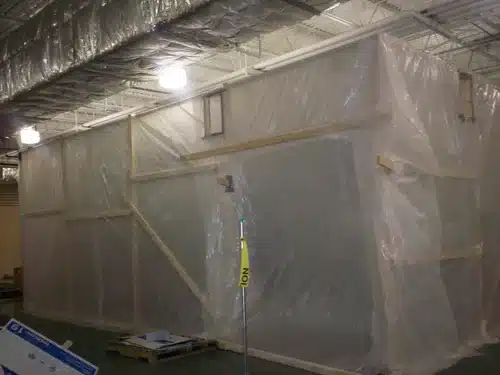
A major hesitation facility managers have when scheduling concrete repair is the fear of collateral contamination. Routing out cracked control joints requires cutting directly into the slab, which generates an immense volume of fine, airborne silica dust. If left unmanaged, this toxic white powder will get sucked into your massive warehouse circulation fans, blanketing your palletized inventory, contaminating sensitive electronic components, and creating a severe OSHA respiratory hazard for your employees. We respect your facility by adhering to a strict hospital-grade cleaning protocol. Every piece of cutting and routing equipment we deploy is physically tethered to industrial, multi-stage HEPA vacuums. These specialized extraction systems feature 300-CFM motors that capture 99.9% of the concrete silica dust at the exact point of contact, before it ever enters the ambient air of your facility. We operate completely dust-free, ensuring your valuable stock remains perfectly clean, your air quality remains pristine, and your facility avoids any costly OSHA citations for silica exposure during the repair process. When we pack up our tools, the air remains clear, and your logistics continue without interruption.

Transparent B2B Estimating Based on Exact Linear Footage
Managing a corporate facility budget requires absolute financial predictability. You cannot submit an open-ended “time and materials” invoice to your accounting department and hope for the best. The primary reason commercial property managers hate dealing with generic contractors is the rampant bait-and-switch pricing model, where the final bill mysteriously doubles due to undocumented hourly labor overruns. We operate as a professional B2B partner, which means we utilize a strictly transparent, mathematically driven estimating philosophy. We price our commercial slab repair based entirely on exact, measurable metrics. When our industrial estimator walks through your facility, we use digital measuring wheels to calculate the precise linear footage of the shattered control joints or the exact square footage of the surface spalling. We then provide a firm, upfront flat-rate quote for the complete scope of work. This quote includes dustless routing, industrial polyurea, heavy machinery mobilization, and final flush shaving. There are absolutely no hidden fees, no hourly surprises, and no ambiguous upcharges. You receive the exact financial clarity required to secure rapid corporate approval. We document everything clearly so you can trust the financial scope.

Your Trusted Dallas Partner for Commercial Concrete Restoration
Your commercial warehouse floor is the literal foundation of your operational revenue. When heavy forklift traffic and extreme Dallas temperatures cause your concrete to shatter and spall, you cannot rely on slow-moving residential contractors or cheap, temporary cosmetics. Urban Concrete & Construction stands as the definitive technical authority for B2B concrete restoration in the Dallas Metroplex. We combine rapid-curing industrial polyurea, zero-dust routing technology, and a deep understanding of heavy-machinery physics to execute permanent repairs without shutting down your business. We know how to navigate 24/7 logistics environments, we exceed municipal load-bearing codes, and we treat your facility with absolute professionalism. Stop letting a broken control joint destroy your forklift tires and delay your shipping quotas. Take decisive action to restore your floor’s structural integrity. Do not let a minor crack evolve into a major shutdown. Contact our commercial dispatch team near the Dallas Design District right now to schedule an immediate facility assessment. We are ready to deploy, repair, and return your warehouse to maximum velocity in just two hours.
Frequently Asked Questions About Commercial Concrete Floor Repair
How much does commercial polyurea concrete joint repair cost per linear foot in Dallas?
The average cost is $15 to $25 per linear foot for industrial polyurea joint repair. In the Dallas market, pricing depends on the depth of the spalling and the required width of the mechanical surface routing. Urban Concrete & Construction utilizes digital measuring wheels to provide an exact flat-rate quote, ensuring facility managers avoid open-ended “time and materials” invoices.
How many years does a polyurea concrete repair last under 10,000-pound forklift traffic?
A properly installed polyurea control joint repair lasts 10 to 15 years under continuous heavy forklift traffic. The longevity stems from the material’s specific 80-85 Shore A hardness, which provides the exact flexibility needed to absorb shock while supporting massive compressive loads. Urban Concrete & Construction prevents premature failure by utilizing V-blade diamond saws to expose clean, raw concrete edges, ensuring absolute molecular adhesion that outlasts standard cement patches.
Does industrial polyurea emit VOCs that contaminate food-grade warehouse inventory?
No, our industrial polyurea compounds are 100% solids and emit zero Volatile Organic Compounds (VOCs) during the curing process. This completely odorless formulation makes it the only acceptable joint repair material for USDA-inspected food distribution centers and pharmaceutical warehouses in Dallas. Urban Concrete & Construction combines this zero-VOC chemistry with 300-CFM HEPA dust extraction vacuums to ensure absolute atmospheric safety for your sensitive palletized inventory.
Do your polyurea floor repairs meet OSHA walking-working surface standards for forklifts?
Yes, all flush-shaved polyurea repairs strictly comply with OSHA Standard 1910.22 for safe walking-working surfaces. Eliminating jagged concrete lips and wide craters instantly removes the ergonomic hazards that trigger costly workers’ compensation claims and municipal fines in Dallas. Urban Concrete & Construction achieves a perfectly seamless transition using heavy-duty floor scrapers, ensuring your material handling equipment does not suffer the violent kinetic shocks that cause loads to drop.
Will polyurea bond to a Dallas concrete slab with a failed sub-slab vapor barrier?
No, polyurea will not bond properly to a concrete matrix that is actively sweating moisture. If your Dallas facility has a compromised vapor retarder causing hydrostatic pressure and high moisture vapor emission rates (MVER), standard polyurea will bubble and delaminate. Urban Concrete & Construction conducts thorough moisture testing prior to application and uses specialized moisture-mitigating epoxy primers when necessary to ensure the final high-early-strength patch locks permanently in place.
Can you install rapid-curing polyurea in sub-zero Dallas refrigerated logistics centers?
Yes, we routinely install polyurea control joint fillers in freezer warehouses operating at temperatures as low as -25°F. Unlike standard epoxy joint fillers that freeze and fail to cure below 32°F, our specialized polyurea elastomer is chemically engineered to cure in extreme cold. Urban Concrete & Construction utilizes heated plural-component mechanical pumps to inject the material directly into the active cold storage floor, completely eliminating the need to defrost your facility.
Can you fix Dallas warehouse slabs that have sunken under heavy pallet racks?
Yes, we utilize high-density polyurethane foam injection to permanently lift and re-level sunken commercial concrete slabs. When North Texas Blackland Prairie clay shrinks or washes out, heavy stationary racking point loads cause the floor panels to dip. Urban Concrete & Construction performs structural slab jacking beneath the concrete matrix to stabilize the subgrade and restore the floor to a perfectly flat plane without requiring full slab replacement.
How much clearance space do technicians need to repair a warehouse floor joint?
We require exactly 10 feet of linear clearance space to safely operate our routing and injection equipment. You do not need to empty adjacent pallet racks or shut down the entire distribution center aisle. Urban Concrete & Construction establishes highly contained micro-zones using temporary safety barricades, allowing your reach trucks and automated guided vehicles to safely bypass the active repair zone during the brief 120-minute cure window.