
What Concrete Property Maintenance Covers in Dallas
Ongoing concrete maintenance is a scheduled service program – not a one-time fix.
It covers the full range of minor-to-moderate concrete work that keeps a property’s surfaces safe, functional, and inspection-ready. That includes crack sealing, joint re-sealing (filling or replacing the material between concrete panels to block water infiltration), surface patching, trip hazard correction, and drainage reviews around slab edges.
Concrete property maintenance is scheduled upkeep that protects surfaces you already own. It covers the full range of preservation work: joint sealing, crack repair, surface resealing, efflorescence treatment, and condition-based inspections. This is not a replacement service. It’s not a repair conversation after something has failed. Concrete property maintenance in Dallas is what property owners, HOA managers, and commercial operators schedule before damage compounds – because catching a deteriorating joint seal costs a fraction of what replacing a slab section runs.
Concrete property maintenance in Dallas serves a different purpose than project work. Project work builds something new. Maintenance work protects what’s already there. For commercial properties, HOA communities, and multi-unit sites, maintaining concrete on a schedule is the difference between a predictable annual line item and a surprise capital expense.
Preventive concrete maintenance – a planned schedule of inspection, sealing, and surface treatment performed before visible damage appears – is the category. This page covers what it includes, how we run it, and why Dallas surfaces need it on a consistent schedule.
Urban Concrete & Construction structures maintenance as a recurring relationship. Same crew. Same property. Documented visit by visit.
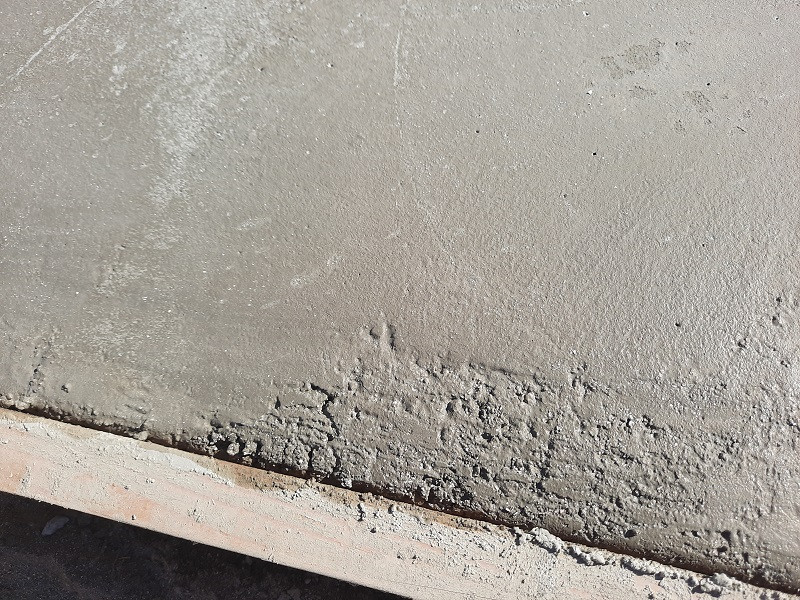
We Maintain Properties Across Dallas's Most Active Corridors and Neighborhoods
Dallas’s commercial zones put concrete through conditions most markets never see.
Properties along the LBJ Freeway corridor (I-635), the industrial zones near I-30 and I-20, and the high-traffic commercial strips throughout North Dallas deal with a combination of heavy vehicle load, spring drainage problems, and the consequences of Blackland Prairie clay soil movement underneath every slab. Dallas sits on some of the most expansive clay soil in North America – it shifts seasonally with moisture changes, putting pressure on concrete from below year-round. For a deeper look at how this soil affects concrete across all project types, see our main Dallas concrete services page.
What distinguishes Dallas maintenance work from other markets is the loading pattern. Commercial corridors near I-635 see delivery vehicle traffic year-round. That repeated load stress on slabs that are simultaneously shifting from below creates a compounding failure pattern that residential-style maintenance schedules don’t account for. Properties that lack a structured inspection cycle discover this only after a panel has already shifted and the damage is visible at ground level.
We maintain properties across the Dallas metro with that specific combination of load stress and soil behavior in mind. Every visit includes a review of high-movement zones – typically slab edges near drainage lines and control joints on south-facing surfaces that dry out fastest.
Dallas concrete spans everything from 1960s residential flatwork to brand-new commercial pads. Inside Loop 12, we see original driveways and sidewalks that have lived through fifty Texas summers. Surface wear patterns are different there. Joint sealant breaks down faster in older pours because the concrete itself has lost moisture content over decades – it becomes more brittle, and gaps widen faster.
North Dallas is a different story. The HOA communities spreading through ZIP codes 75252, 75287, and 75243 deal with newer concrete that’s still settling into the clay. Shrinkage cracks form early. HOA compliance timelines are tight. Knowing which surfaces need what – based on age, pour type, and neighborhood soil profile – is what a general maintenance call can’t give you. We bring that context to every visit in Dallas.
How Dallas Seasons Work Against Unsealed and Unjointed Concrete
Sealed concrete in Dallas outlasts unsealed concrete by years – sometimes by decades.
Here’s what most property owners don’t realize about Dallas’s climate cycle: it’s not one season that does the damage. It’s the sequence.
Spring soaks the ground. The Blackland Prairie clay that runs beneath most of Dallas – from Oak Cliff through East Dallas and into the northern HOA corridors – responds to that moisture by expanding vertically. That upward pressure isn’t uniform. It lifts concrete at different rates depending on slab thickness and how close a joint is to a drainage low point, which is why maintenance inspections check joint stress patterns rather than just visible cracks.
Then summer arrives and surface temperatures can hit 140°F on unshaded flatwork. Concrete expands. If joint sealant has dried out or cracked, that gap becomes a channel for water on the next rain cycle. Then winter. Dallas doesn’t get sustained freezes, but it gets them. When water has settled into open joints and hairline cracks and temperatures drop hard, that trapped moisture freezes and expands. Surfaces that looked fine can show spalling (surface flaking and chipping) within weeks of the thaw.
That cycle – wet swelling, heat expansion, freeze contraction – is why concrete joint sealing in Dallas isn’t optional for surfaces you want to keep. Concrete joint sealing means filling the planned gaps cut into slabs with flexible sealant designed to move with the concrete. When that sealant fails and goes unaddressed, water takes over the job. The sequence above does the rest.
Efflorescence – the white powdery deposit that appears when water migrates through concrete and pulls dissolved salts to the surface – is often the first visible signal. It’s not structural. But it’s a clear sign that moisture is moving through the slab in a way that needs to be addressed before the next season loads the surface again.
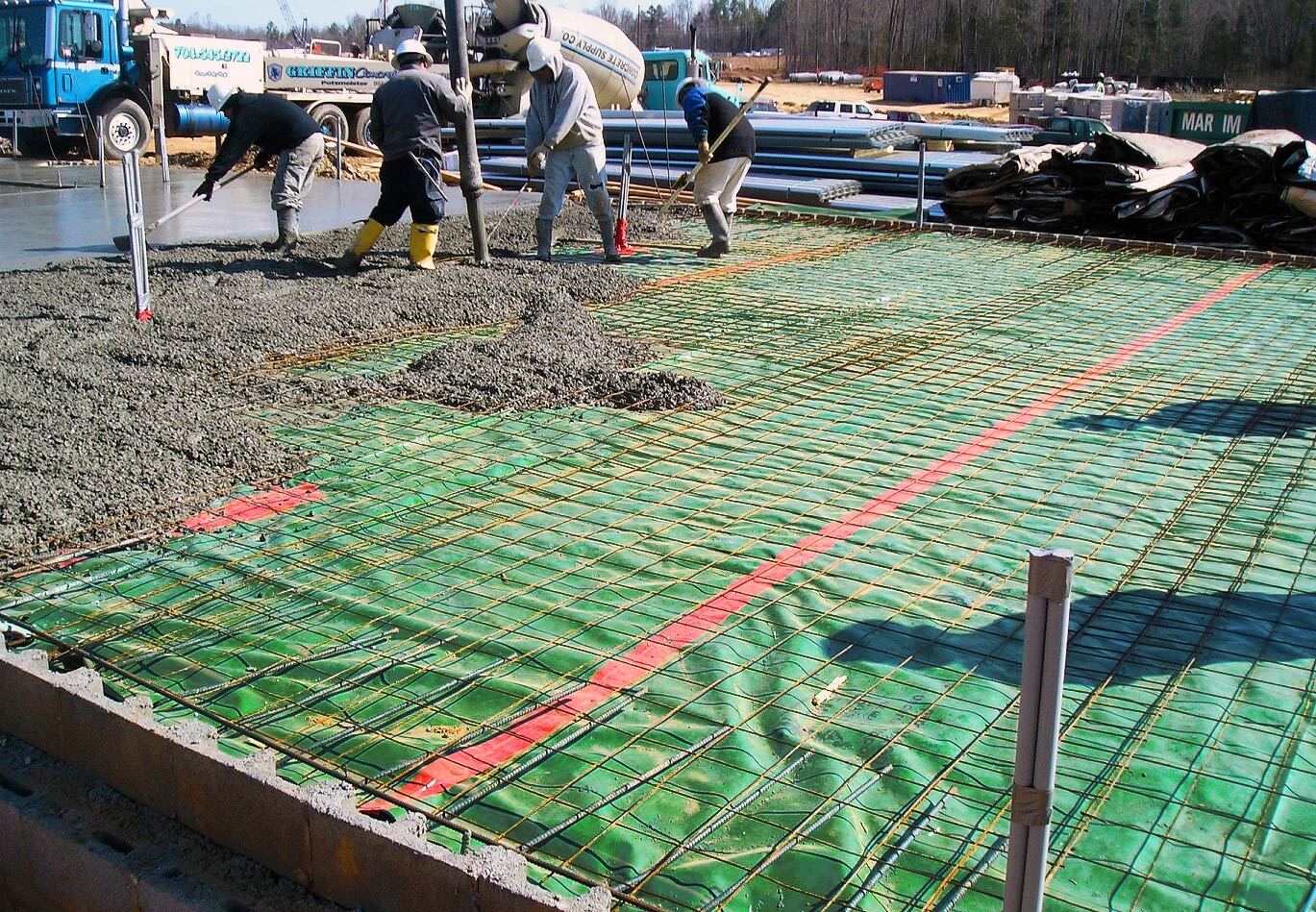

How Hairline Cracks Become Liability Issues on Dallas Commercial Properties
A crack at the control joint is a routine finding. The same crack ignored through two wet seasons is a different conversation.
Walking properties in Dallas where the maintenance history is essentially zero turns up a consistent pattern. No documentation of when the concrete was poured, where the control joints were placed, or what the drainage looked like before a parking lot expansion. What shows up is the same every time: hairline cracks opened at the joints, water running under the slab edge closest to the retention area, and one panel in the loading zone lifted almost three-quarters of an inch above the adjacent section.
That lift is what we call a trip hazard – a raised or sunken edge where one concrete panel has shifted relative to the next one. On a commercial property, a trip hazard in a high-foot-traffic zone isn’t just a concrete problem. It becomes a facilities liability the day someone catches their foot on it.
The repair on a loading zone panel like that is typically a grinding correction and surface patch. Two hours. That’s it. But the same visit often turns up three or four other locations where concrete spalling – the surface flaking and breaking apart in small pieces – has started near drain corners. Caught there, it’s a patching job. Left another season, it’s a panel replacement, and the drain relocation that should have happened earlier becomes part of the scope too.
That’s the real cost of skipping scheduled maintenance in Dallas. It doesn’t happen all at once. It compounds quietly, one wet spring at a time.
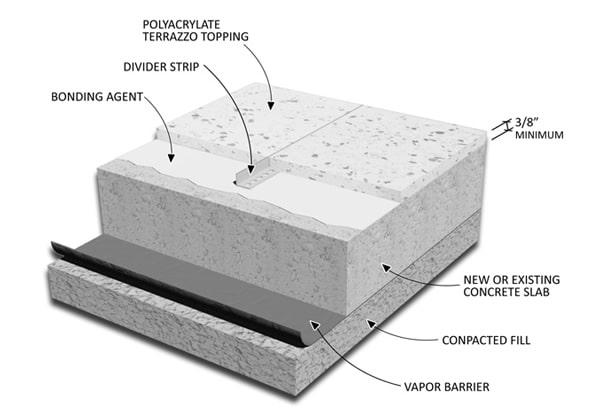
Plan Ahead - Your Surfaces Stay Within HOA Standards Year-Round
HOA concrete compliance in Dallas is easier to maintain than it is to fix after a violation notice.
Many Dallas-area homeowners associations require driveways, sidewalks, and flatwork to meet appearance and structural standards. HOA concrete compliance means staying within those guidelines proactively – not scrambling to address a notice after a board inspection. The problem is that most surface deterioration happens gradually. A small crack opens over several months. A stained section develops after one wet season. By the time a violation arrives, the surface has been declining for a while.
Here’s how we handle it: maintenance visits include a written surface condition report. That document lists what was treated, what was found, and what to monitor at the next visit. Property managers can hand that report to an HOA board directly. It shows a maintenance record – documented evidence that the surface is being cared for on a schedule.
That kind of paper trail matters. It’s the difference between a property manager fielding a violation complaint and one who can pull a maintenance log and end the conversation.

Your Maintenance Schedule Is Built Around Your Property, Not Ours
We structure every recurring maintenance plan around what your specific property actually needs.
Some properties need two visits per year – one before spring rains and one after summer heat. Properties with older concrete, more vehicle traffic, or documented drainage issues may need quarterly check-ins. We review the property on the first assessment visit and recommend a schedule based on what we find, not a fixed package tier.
Property managers working with multiple sites in the Dallas area can consolidate those properties under a single maintenance account. One point of contact. One crew that knows the history of every location. Visit documentation available after each completed appointment.
If your concrete is newer and in good condition, your schedule will reflect that. We won’t recommend more visits than your property actually warrants.
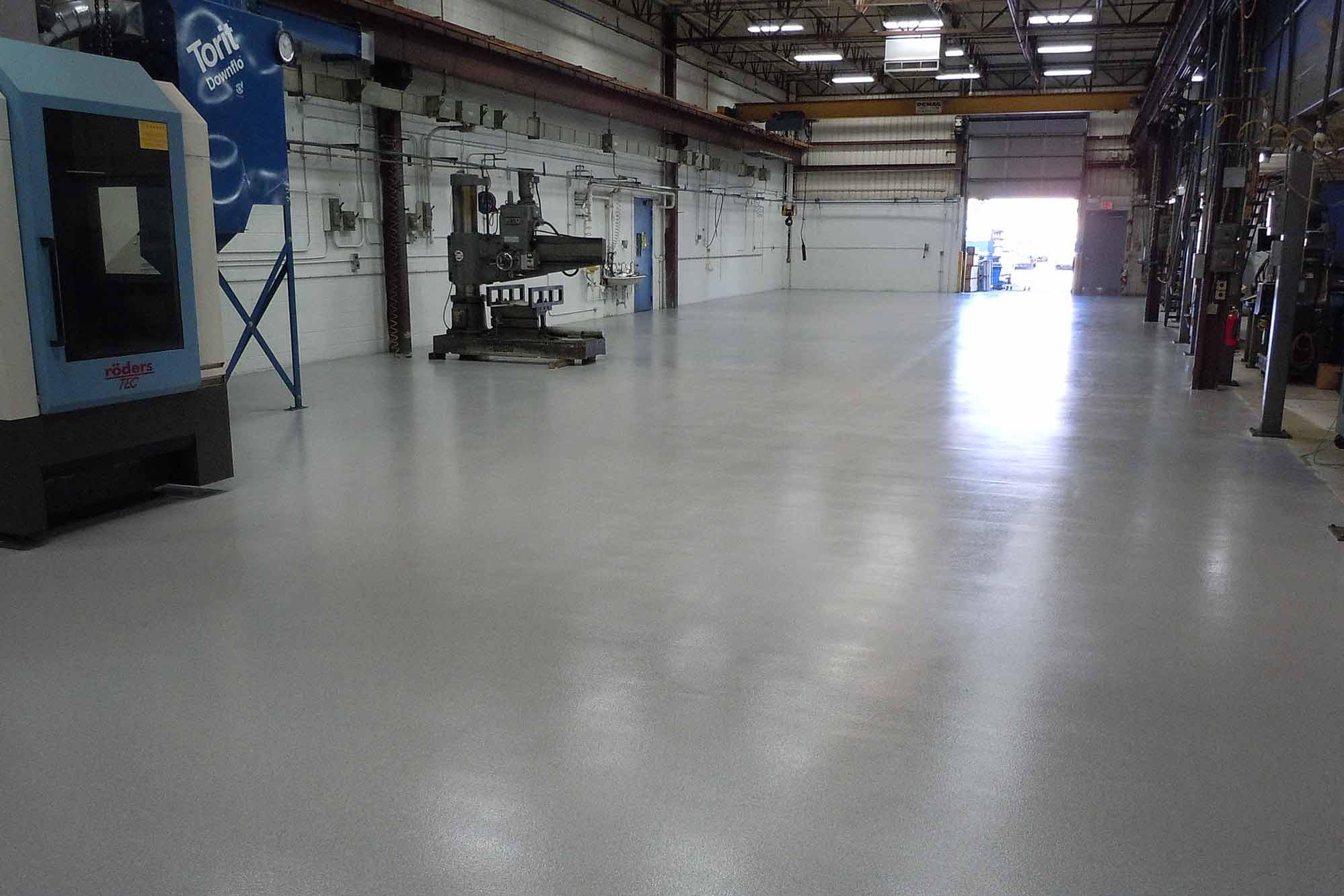
Everything Included in a Scheduled Concrete Maintenance Visit
A maintenance visit covers every surface condition that affects longevity and compliance.
Each scheduled visit includes:
- Joint inspection and resealing – control joints and expansion joints checked for sealant failure; re-filled with flexible sealant matched to the original joint width
- Crack routing and repair – cracks routed to a clean profile and filled; hairline cracks that don’t yet need routing are logged and flagged for next visit
- Surface cleaning and efflorescence treatment – surface deposits removed; moisture migration noted in the written report
- Penetrating concrete sealer application – a penetrating concrete sealer soaks into the slab surface from the inside out, protecting against water, oil, and UV degradation; reapplication scheduled based on surface wear and product type
- Visual spalling assessment – any surface layer deterioration documented with location and severity
- Concrete resurfacing overlay evaluation – if a surface is structurally sound but worn, a resurfacing overlay (thin new concrete material applied over the existing slab) may be recommended as a cost-efficient next step
- Written condition report – delivered at visit completion; yours to keep on file
Three coats of sealer on a worn surface isn’t the answer. The right sequence is: clean, treat, seal, document. That’s the order we follow.
How We Decide What Gets Repaired, Monitored, or Left Alone
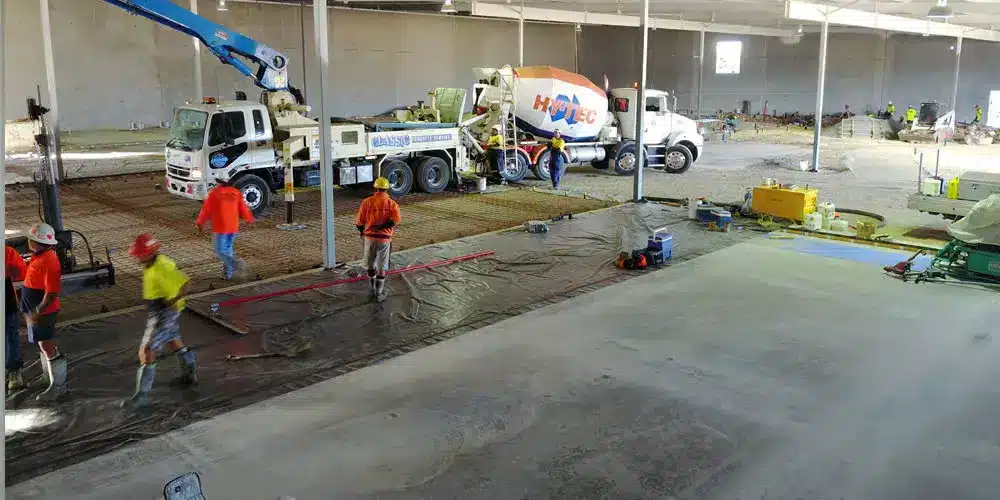
Every maintenance visit produces three categories of findings – not just a repair list.
Our inspection criteria sorts conditions into three groups:
- Repair Now: Active trip hazards, open joints with water infiltration evidence, spalling that has breached the surface layer, and any panel movement exceeding acceptable tolerances. These get addressed in the same visit or scheduled within 48 hours.
- Monitor: Hairline cracks within acceptable width ranges, surface discoloration without depth, and joint seals showing early wear but still functional. These are flagged in the condition report and re-evaluated on the next visit.
- Note Only: Minor surface texture variation, normal aging appearance, and aesthetic conditions that don’t affect structural performance or safety. Documented for record but no action recommended.
This classification approach keeps maintenance costs predictable. Property managers know exactly what was found, what was done, and what to expect at the next visit. No surprise line items. No scope inflation.
From First Assessment to Documented Condition Report - Here's the Process
Every property starts in the same place – a complete first-look assessment before any maintenance work begins.
Initial Property Assessment & Inspection
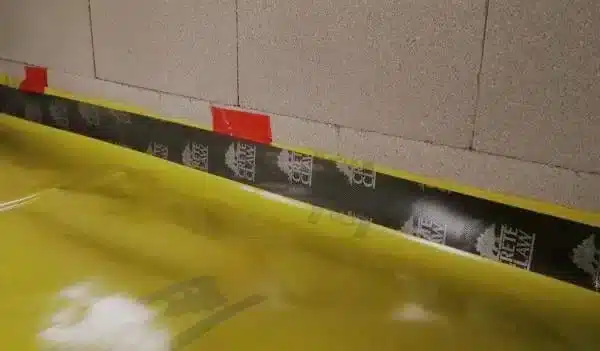
We walk the full concrete surface area of your property. Driveways, parking areas, walkways, loading zones, and any other flatwork – horizontal concrete surfaces including driveways, patios, and parking areas. We note the location of every control joint, document visible cracking, identify drainage patterns, and photograph any areas of concern. This creates the baseline record your property will be measured against going forward.
We’re looking at joint condition, crack patterns, surface finish wear, drainage direction, and any visible efflorescence or spalling. The inspection takes time because Dallas surfaces don’t all fail the same way. A north-facing slab in a shaded courtyard behaves differently than an exposed commercial parking apron on the south side of a building.
Maintenance Visit Execution
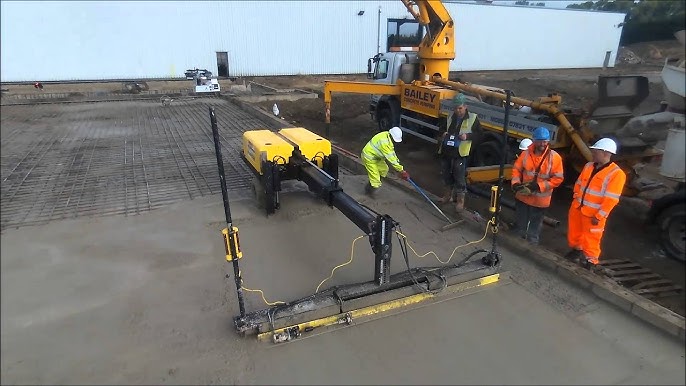
Each scheduled visit follows the same inspection protocol as the baseline, comparing current conditions against prior documentation. Repair Now findings get addressed during the visit when possible. Larger scope items are quoted separately and scheduled at the property manager’s direction.
Based on the inspection, we complete all applicable maintenance tasks in one visit: joint resealing, crack repair, surface treatment, and sealer application. We bring materials matched to the surface type and condition. If a section needs resurfacing overlay or a repair that goes beyond standard maintenance scope, we document it and present options separately – no surprise add-ons during the visit.
Written Documentation After Every Visit
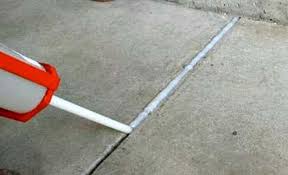
After every visit, we deliver a written condition report. It includes:
- Findings sorted by the three-category system above
- Before/after photos for any work completed
- Status updates on previously monitored conditions
- Recommended timing for the next visit
That report becomes your concrete maintenance record – useful for property handoffs, insurance documentation, and capital planning. HOA boards operating under compliance review timelines in communities throughout North Dallas and Mesquite use these reports as their primary documentation during annual property reviews.
For commercial clients and HOA property managers in Dallas, this document becomes part of the property’s maintenance record. It’s a practical tool – not a formality. Recurring clients get a maintenance history they can reference when planning capital budgets, preparing properties for sale, or responding to HOA inspections.
Dallas Properties and Communities on Our Maintenance Routes
Urban Concrete & Construction serves commercial and residential properties throughout Dallas, Texas.
Our active maintenance routes cover properties along major corridors including the LBJ Freeway (I-635), Ross Avenue, and Greenville Avenue, as well as the industrial zones near I-30 and I-20 south of downtown. We work with property management firms, HOA boards, and individual commercial property owners in Dallas ZIP codes 75201 through 75254 and surrounding inner-metro zones including Garland, Mesquite, and Irving. If your property falls outside these areas, call us directly – we serve much of the broader DFW metro.
We serve established neighborhoods inside Loop 12, commercial corridors along I-30 and Thornton Freeway, and the growing HOA communities in the northern Dallas band – including ZIP codes 75252, 75287, and 75243. We also cover older flatwork districts near Garland Road and the commercial property strips along Northwest Highway. If your property is in the Dallas metro, reach out and we’ll confirm coverage.
Call (214) 225-2062 or email info@concreteconstructiontx.com to confirm availability for your specific location.
SCHEDULE YOUR PROPERTY WALKTHROUGH
Put Your Property on a Concrete Maintenance Schedule Today
Scheduled concrete maintenance is a decision you make once – then it runs in the background.
Contact Urban Concrete & Construction to set up a first-look property assessment. We’ll walk your site, document current conditions, and recommend a visit frequency that fits your property’s actual needs. You can reach us by phone, email, or by submitting a request through our contact form – we respond to all three within one business day.
Call (214) 225-2062, email info@concreteconstructiontx.com, or use our online contact form to request your first property walkthrough. You’ll hear back within one business day. One visit gives you a baseline. A schedule keeps your surfaces protected.
Frequently Asked Questions About Concrete Property Maintenance in Dallas
How much does a recurring concrete maintenance plan cost for a commercial property?
Maintenance pricing depends on property size, concrete condition, and visit frequency. Most commercial plans run $300 to $1,200 per visit, with annual costs shaped by how many scheduled inspections your property requires. Properties with older concrete or documented drainage issues cost more to maintain than newer slabs in good condition. Pricing is confirmed after the first-look assessment – not estimated before we’ve walked the site.
What actually happens during a maintenance visit - how long does it take?
Each visit follows a structured inspection protocol covering all concrete surfaces. Most commercial properties take two to four hours on-site, depending on square footage. Repair Now findings get addressed same-day when possible. You receive a written condition report within one business day showing findings, completed work, and next visit recommendations.
How is a scheduled maintenance plan different from just calling when something breaks?
Scheduled maintenance catches damage at the hairline stage – before water gets under the slab. Reactive repair means finding problems only after panels have shifted and trip hazards have formed. On Dallas clay soil, that difference in timing often determines whether a patch job is sufficient or a full panel replacement is necessary.
Can you tell the difference between normal cracking and damage that actually needs repair?
Yes – not all cracks require action. Every visit sorts findings into three categories: Repair Now, Monitor, and Note Only. Hairline cracks within acceptable width ranges are documented and watched across visits, not automatically repaired. That classification prevents unnecessary work and keeps your maintenance costs predictable over time.
Do property managers with multiple Dallas sites need separate contracts for each location?
Multiple properties can be consolidated under a single maintenance account. One point of contact, one crew with documented history across every location, and one condition report system covering all sites. That structure eliminates the coordination overhead of managing separate contractor relationships for each property.
How do I know what visit frequency my property actually needs - is there a standard schedule?
Visit frequency is set after the initial property assessment, not before. Some properties need two visits per year. Others with heavier traffic or drainage challenges need quarterly check-ins. We recommend a schedule based on what we find during the walkthrough – not a fixed package tier applied regardless of your concrete’s actual condition.
How often should concrete be resealed on a Dallas property?
Most Dallas concrete surfaces need resealing every two to four years. Heat, UV exposure, and the wet-dry clay soil cycle degrade penetrating sealers faster here than in milder climates. Surface traffic volume also matters – a commercial parking apron wears sealer faster than a residential patio. The condition report from each visit sets the recommended interval for your specific surfaces.
Does concrete maintenance include surface resealing, or is that a separate service?
Surface resealing is included in the scope of maintenance when inspection findings indicate the existing seal has failed or is no longer providing effective protection. It isn’t applied automatically on every visit – only when the condition report shows it’s warranted. That keeps your maintenance spend tied to actual property needs rather than a default service checklist.
What documentation do HOA boards receive after a maintenance visit?
HOA boards receive the same written condition report delivered after every commercial visit – findings by category, before/after photos for completed work, and a recommended timeline for the next inspection. Communities in North Dallas and Mesquite routinely use these reports as their primary compliance documentation during annual board reviews and property management audits.
How do I schedule the first concrete surface inspection?
Call (214) 225-2062 or email info@concreteconstructiontx.com to book the initial walkthrough. The first inspection assesses surface condition across all concrete in scope – driveways, walkways, patios, slabs – and produces a written report before any maintenance work is scheduled. No commitment is required before the inspection is complete.